Connection
How to deal with loneliness: connection as part of your health
By Carol Pocock11 minute read
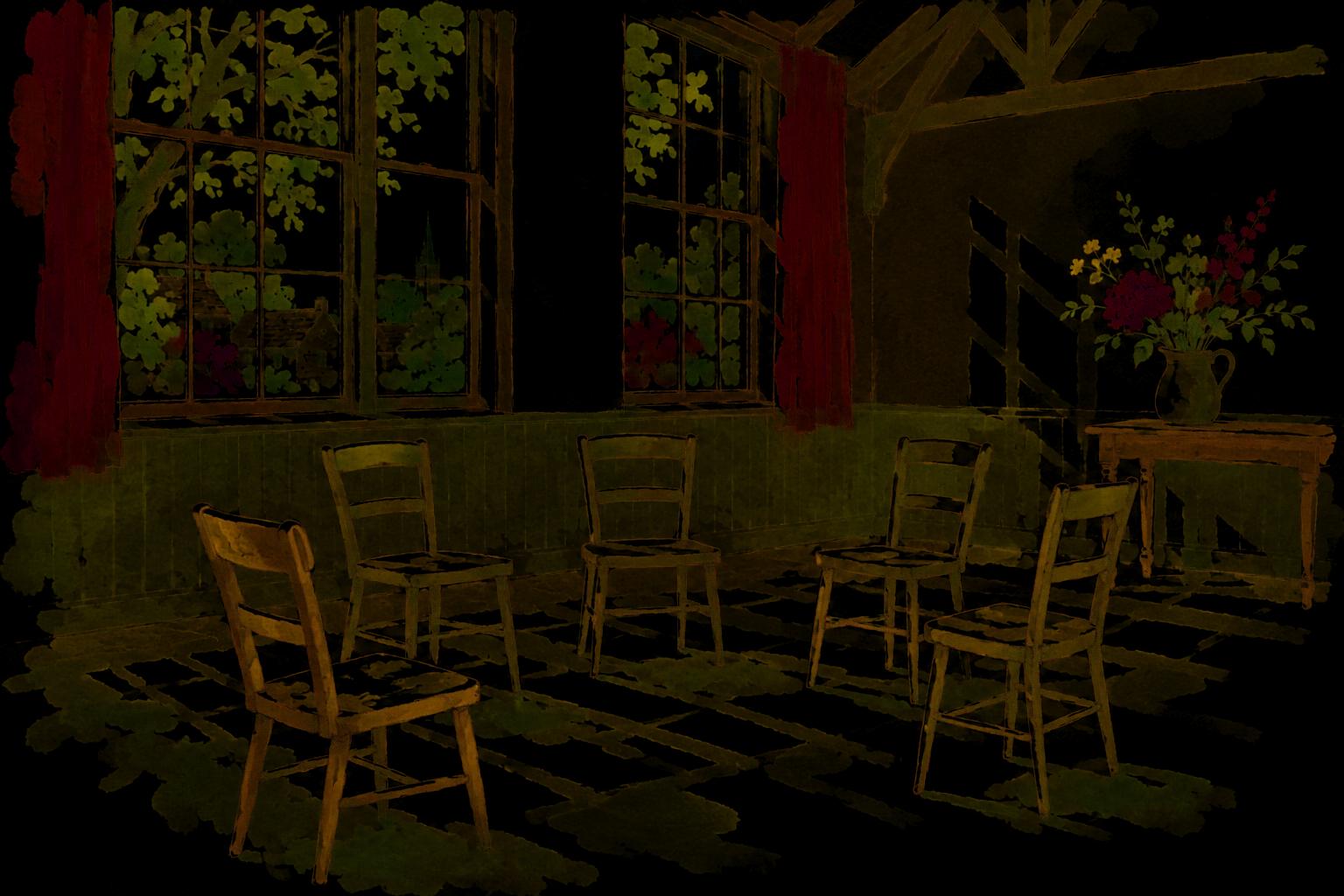
The best way I know to deal with loneliness is to treat connection as part of your health, the same way you treat food, sleep and movement, and to practice it in small, regular ways rather than waiting until you feel ready. Connection does not only mean other people. It also means your relationship with yourself, with a sense of purpose, with animals and with the natural world, and each of these can be built a little at a time.
I write about this as a wellness coach and yoga teacher who has spent years building health from a few fundamentals. In my work, connection is the seventh petal of what I call the Starflower: seven petals, each a "Right Action", held up by a stem of good habits. I put connection on the flower because I have watched people, myself included, get the food, the movement and the sleep right and still feel that something was missing.
Why connection is a petal, not an extra
You can eat well, move every day, breathe slowly, sleep enough and still feel unwell. Most often, in my experience, the missing piece is connection.
Each petal of the Starflower is a "Right Action", a fundamental of health you practice until it becomes a habit. Right Connection sits beside Right Feeding and Right Rest, not beneath them. It is not the reward you earn once the serious health work is done. It is part of the serious health work.
Public health bodies have started to say the same. In 2023 the US Surgeon General published an advisory on loneliness and isolation, describing them as a public health concern, and the World Health Organization set up a commission on social connection the same year. When the people who write health policy begin treating loneliness as a health matter, it is worth taking seriously at home.
It also helps to separate two words that get mixed up. Being alone is a circumstance. Being lonely is a feeling: the gap between the connection you have and the connection you need. Plenty of people live alone and feel well connected. Plenty of people live in a full house and feel deeply lonely. So the question is never only "how many people do I see?" It is "am I getting the kind of connection I need?"
The four kinds of connection, in plain words
I think of health as having four parts, which I call the four bodies: physical, mental, emotional and spiritual. They lean on each other, and connection touches all four.
| Kind | What it looks like day to day |
|---|---|
| Physical | Being in the same room, a hug, a shared meal, walking side by side |
| Mental | Good conversation, swapping ideas, learning something with someone |
| Emotional | Being honest about how you are, and being met with care |
| Spiritual | Feeling part of something larger: a community, a purpose, nature |
Physical connection is the simplest and often the one we lose first. Sitting at a table with someone, a hand on a shoulder, moving alongside other people in a class. Many people find their body settles in the company of someone they trust.
Mental connection is the exchange of ideas. A conversation that makes you think, a book group, a neighbor who knows more about tomatoes than you do. Variety helps here: close friends, and also the familiar faces you chat with in passing.
Emotional connection asks the most of us. It means letting someone see how you actually are. The two most isolating words I know are "I'm fine", said when you are not. Emotional connection grows when you give room to all your feelings, not just the tidy ones, tell the truth about them, and remember that whatever you are feeling, other people have felt it too.
Spiritual connection is the sense of belonging to something bigger than your own day. For some people that is faith. For others it is a community they serve, a cause, the sea, or the quiet of early morning.
Connection with other people
Most of us need some connection with other people, though the amount varies a great deal. Some people feel full after one long conversation a week. Others need company most days. Neither is wrong. The aim is to meet your own need honestly, not to match someone else's calendar.
A rule of thumb some people use is "5-3-1": talk with five different people over a week, keep up three close relationships, and spend about an hour a day on connection of some kind. I find it useful less as a target than as a check. If I have spoken only to the same one person all week, or have not had a real conversation with a close friend in a month, the numbers show me where the gap is.
Small contact counts more than people expect. A proper hello to the person at the till, eye contact, a few words with a neighbor over the fence. Phones make this harder, because it is easy to stand in line and look at a screen. Putting the phone in a pocket is one of the simplest connection habits there is.
Shared activity is where a lot of real connection starts. I went to yoga classes for my body and, over time, found people I was glad to see. If making new friends feels like the hardest part, I have written a separate piece on how to make friends as an adult.
Connection with yourself
This is the part people skip, and in my view it comes first. If you do not know what you are feeling, or you spend your days performing a version of yourself, it is hard to connect honestly with anyone else.
For me, self-connection is mostly meditation. I sit most mornings, sometimes for fifteen minutes and sometimes for an hour, and I notice that the days I begin by going inward are the days I listen better to other people. Some years ago I sat a ten-day silent Vipassana retreat: no talking, no eye contact, no phones or books. It sounds like the opposite of connection. What it showed me was how little time I had ever spent simply being with myself.
You do not need a retreat. Self-connection can be:
- ten quiet minutes with a cup of tea and no screen
- a few slow breaths through the nose before you answer a message
- a page in a notebook about how the day actually felt
- speaking to yourself the way you would speak to a good friend
Solitude, chosen and cared for, can be one of the most nourishing parts of a week. It is where you hear yourself think. The difference between solitude and loneliness is often whether you chose it and whether you are kind to yourself while you are in it. If your thoughts tend to spiral when you are alone, my piece on how to stop overthinking may help.
Connection with purpose: how to find your purpose without a grand plan
"How to find your purpose" can sound like a question that needs a mountaintop. I think it is smaller and more practical than that. Purpose is having a reason to get up that matters to you, and people who depend on you, or things that need your care.
The question I find most useful is not "what is my purpose?" but "what makes me come alive?" Where do you feel most like yourself? What would you keep doing even if no one noticed? The answers are often ordinary: a garden, a craft, helping out at a school, teaching someone a skill, cooking for a neighbor.
Purpose tends to wobble at the big turning points of life: a job ending, children leaving home, a move, a loss. That is when it helps to tend it on purpose, the way you would tend any other petal. Try writing down three things you have done in the last month that left you feeling useful or absorbed, and look for one you could do again this week.
Connection with animals and with nature
For many people, the warmest daily connection they have is with an animal. That bond is real. An animal greets you, needs you and gets you outdoors. As I put it in my book, "unlike a gym membership, a dog won't let you skip a day." If you cannot keep a pet, many shelters welcome volunteers to walk dogs or sit with cats, and some people offer to walk a neighbor's dog.
Nature is another companion that is always there. Many people find that time outdoors lifts their mood and quiets their mind. Walking under trees, sitting near water, watching the light change in the evening: none of it needs another person, and all of it can make you feel part of something larger. The Japanese practice of forest bathing is simply slow, attentive time among trees, with no goal but to notice.
A few people now find comfort in talking to AI chat companions. If that helps you through a lonely stretch, I would not shame anyone for it. I would treat it as a bridge toward living connection, not a replacement for it.
Small things to do this week
You do not need to change your whole life. Pick one or two of these and do them, the way you would start any new habit. If you want to understand how small steps turn into routines, start with how to build good habits.
- Send one message today to someone you have been meaning to contact. Keep it short: "I thought of you this morning. How are you?"
- Say a real hello to three people you would usually pass by.
- Put your phone away for one meal and one line at the store.
- Tell one person the truth about how you are, instead of "fine".
- Book one regular thing: a class, a walking group, a volunteer shift. Regular is the key word.
- Spend ten minutes with yourself each morning before the screens come on.
- Get outside for twenty minutes, ideally somewhere green.
- Write a short thank-you note to someone who helped you once.
If you would like to practice the self-connection side with guidance, I lead sessions you can follow along with live at Lifetime Body by Design.
Sometimes, a hello is all it takes.
When loneliness needs more than this
Loneliness is a normal human feeling, and most of the time small, steady steps help. But loneliness can slide into something heavier. If it has turned into low mood that lasts for weeks, if you have lost interest in things you used to enjoy, if you are struggling to sleep or eat, or if you feel hopeless, please speak to your doctor. That is not a failure of willpower or of connection. It is a health matter, and it deserves the same care you would give a physical symptom. If you are having thoughts of harming yourself, contact your doctor, a local crisis line or emergency services now.
A few questions people ask me
How do I feel less lonely when I live alone? Build a rhythm of small contact into the week: one regular class or group, one phone call with a close friend, daily hellos with neighbors, and time outdoors. Then add good solitude, so time alone feels chosen rather than empty.
Is it normal to feel lonely even with people around me? It is very common. Loneliness is about the kind of connection, not the number of people. Often what is missing is emotional connection: being honest with one person and being met with care.
I am an introvert. Do I need to socialize more? Not necessarily. Introverts often need fewer, deeper connections, and plenty of solitude. The aim is to meet your own need honestly, not to fill a calendar.
How long does it take to feel less lonely? It varies, and it is usually slower than you would like. Regular, repeated contact matters more than one big effort, so give a new habit a few months before you judge it.
There is more on the seventh petal under Right Connection. If you are starting from scratch, read how to make friends as an adult, and for the quieter side of self-connection, how to stop overthinking.
This article is general information and one person's experience. It is not medical or mental health advice. If you are struggling with low mood, anxiety or loneliness that will not lift, please speak to your doctor.
Carol Pocock is a wellness coach, yoga teacher and the author of Lifetime Body by Design. Guided sessions are at Lifetime Body by Design. More about Carol.

