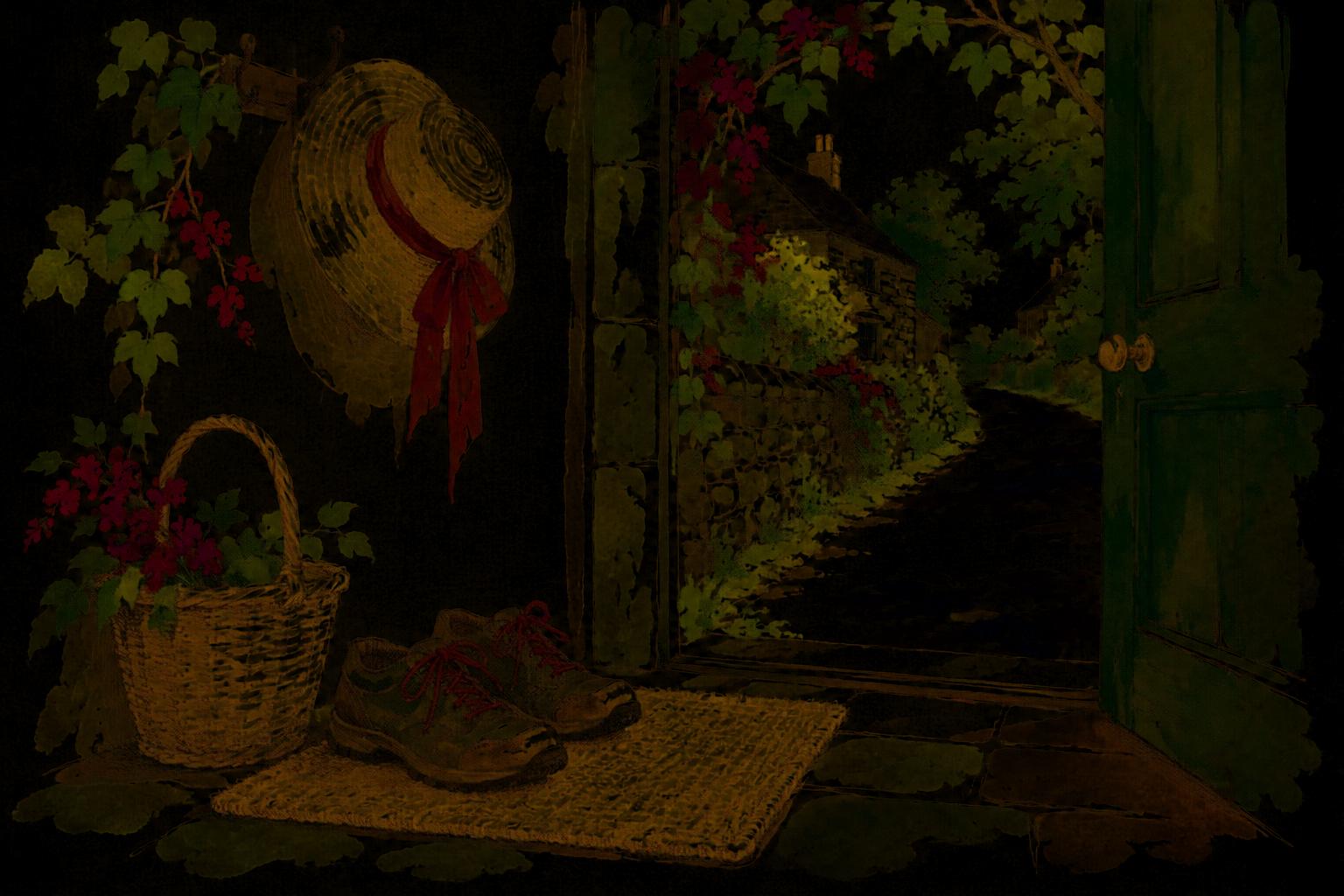
Self-discipline is the habit of following through on what is good for you when you do not feel like it, and most of it is built before the moment arrives, not summoned in it. The people who look disciplined have usually arranged their days so the right choice is the easy one: the cue is in plain sight, the decision was made in advance, and the task is small enough to start. Willpower helps at the edges. Setup does the heavy lifting.
I am a wellness coach and yoga teacher, and I know what it is to feel you lack self discipline. I struggled with my weight and with yo-yo dieting for a long time, and each failed attempt felt like more proof about my character. What changed was not my character. It was how I set up my days.
What self-discipline is, and what it is not
Self-discipline belongs to the stem of the Starflower, the method in my book, Lifetime Body by Design. The seven petals are the healthy actions I call "Right Actions" (thinking, feeding, movement, breath, rest, fasting and connection), and the stem, Right Habits, is what holds them up. Discipline lives in the stem, because habits carry what willpower cannot.
It helps to separate two words that get used as if they meant the same thing.
- Willpower is the effort you spend in a single moment to resist something or push through something.
- Self-discipline is the longer game: following through, day after day, on what you decided matters.
Willpower runs low by evening. Self-discipline is more like a building: you put it up slowly, and once it stands, you do not have to hold it up by hand.
It is also not a fixed part of who you are. "We are not our habits," as I put it in my book. If you have always thought of yourself as someone with no discipline, that is very likely a set of old routines talking, and routines can be rebuilt.
Why willpower alone keeps letting you down
Most plans to "be more disciplined" are really plans to use more willpower. Get up earlier, resist the cookies, force yourself to the gym. They work for a week or two, then a long day comes and the account is empty.
You are not unusual if this is your story. In the American Psychological Association's 2011 Stress in America survey, 27 percent of people trying to make a change said lack of willpower held them back, slightly more than named lack of time. Plenty of us feel we are short of it.
The way around this is not to find more. It is to need less. Every time a healthy action becomes a habit, it stops drawing on willpower at all, and what you have left goes further.
Build it into the room: cues and environment
This is the part I would most like you to take away. Discipline is far easier when the room is on your side. In my own words from the book, it means "arranging the moment so that less discipline is needed."
| The moment | The willpower way | The setup way |
|---|---|---|
| Early morning exercise | Argue with yourself in bed | Clothes laid out the night before, shoes by the door |
| The afternoon sugar craving | Resist the cookie jar | No cookie jar; fruit and nuts on the counter instead |
| Drinking more water | Try to remember | A full jug in sight on the table |
| Weeknight dinners | Cook from scratch when exhausted | Meals cooked ahead, waiting in the fridge or freezer |
| Late-night scrolling | Put the phone down "soon" | The phone charges in another room |
None of the right-hand column asks you to be stronger. It asks you to make the decision once, when you are rested, and let the room carry it for you later.
If a food tempts you, the simplest discipline is not to bring it home. Every packet in the cupboard is an argument you will have to win again tonight.
Fewer choices, decided once
Each decision costs a little effort, and a day full of small decisions wears you down before the big ones arrive. So decide the ordinary things in advance and stop deciding them every day.
- Fix the time. The same wake time every day, and the same slot for your movement. I keep the same wake time every day, and my hour of yoga follows on from it. I do not choose whether to practice; the morning already knows.
- Fix the menu. A short rotation of breakfasts and lunches you like means one less choice when you are hungry.
- Decide the minimum. Choose now what the smallest acceptable version is (ten minutes of walking, one glass of water, two minutes on the mat) so on a hard day there is nothing to think about.
The fewer things I have to decide, the more attention I have for what matters.
Finish what you start, starting small
Self-discipline is built from promises kept, and the easiest way to keep a promise is to make it a small one. A big goal abandoned teaches you that you are someone who quits. A tiny habit kept every day for a month teaches you the opposite, and that lesson matters more than the habit itself.
So start smaller than feels worthwhile, and finish it. Make the bed. Walk to the end of the road and back. Write one line in a notebook. Then, on the days you have more in you, do more. Energy creates energy, and starting is usually the hardest part.
I wrote the full method in how to build good habits that last, the pillar for this section.
Do one hard thing on purpose
Setup does most of the work, but it is still worth doing one thing each day that you would rather avoid. Not to punish yourself. Just to stay in practice at following through when you do not feel like it.
For me, that is running. I love yoga, so rolling out the mat costs me nothing. Running is different: I enjoy it once I am going, but I almost always have to talk myself out of the door. I keep it partly for that reason. Choosing the hard thing once a day seems to make the other hard things a little easier.
Keep the hard thing reasonable. If you are new to exercise or have a health condition, check with your doctor before you start, and choose something within reach.
How to build discipline again after you lose it
Everyone has stretches when it all falls away: illness, travel, grief, a busy season. That is not a verdict on you. Rebuild the way you built it the first time.
- Go back to one habit. Not all of them. Pick your Anchor Habit, the one daily habit you enjoy that steadies the rest, and restart only that.
- Shrink it. Do the minimum version until it runs on its own again.
- Fix the setup first. Before the habit, put the cues back: the shoes, the jug, the cleared cupboard.
- Never skip twice. Missing one day does very little harm. Missing two in a row is where routines slip away, so the day after a miss is the most important one.
One honest note. Some struggles are not a discipline problem at all. Addiction, compulsive overeating and persistent low mood are not failures of willpower, and they are not fixed by trying harder. If something feels out of your control, or your mood has been low for more than a couple of weeks, please talk to your doctor. That deserves proper help.
Make the decision once, when you are rested, and let the room carry it for you.
A few questions people ask me
Can self-discipline really be learned? Yes. It is built from small habits and a day arranged to support them, not handed out at birth. Most people who seem naturally disciplined have simply had their routines for a long time.
How do I build discipline when I have no motivation? Do not wait for motivation. Make the action tiny, put the cue where you will see it, and start. Motivation tends to follow action rather than lead it. If exercise is the sticking point, I wrote about how to get motivated to exercise.
What is the difference between self-discipline and willpower? Willpower is effort in one moment. Self-discipline is following through over time, and it relies on habits so that you need much less willpower.
Is it bad to rely on setup instead of willpower? Not at all. It is the sensible way to do it. Willpower is limited; a well-arranged kitchen is not.
There is more on the stem under Right Habits, including habit stacking. If a busy mind is what gets in the way, see how to stop overthinking. For guided sessions to follow along with, visit Lifetime Body by Design.
This article is general information and one person's experience. It is not medical advice. Please speak to your doctor before making significant changes to your diet, exercise or sleep, or if a habit is affecting your health or mood.
Carol Pocock is a wellness coach, yoga teacher and the author of Lifetime Body by Design. Guided sessions are at Lifetime Body by Design. More about Carol.

