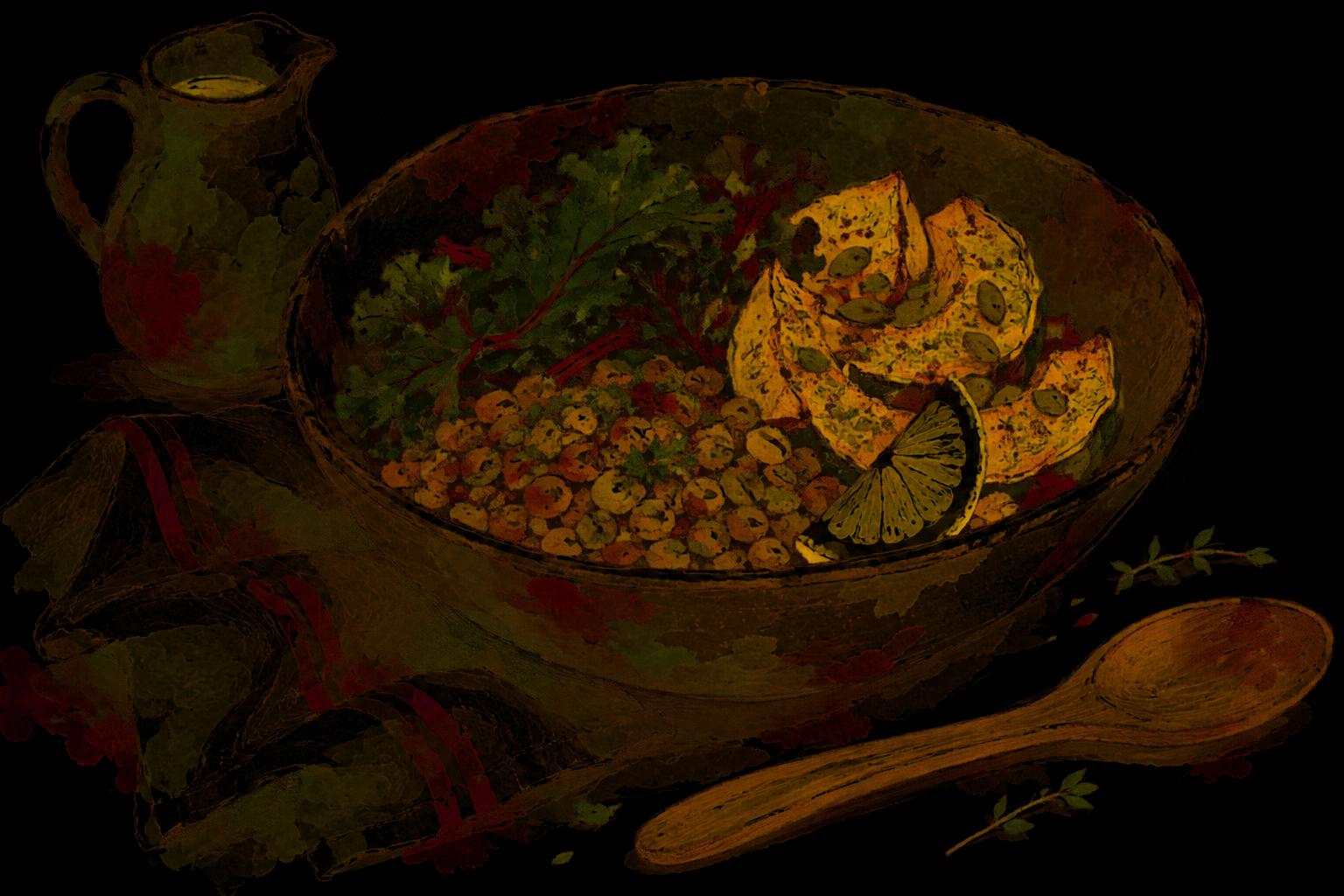
Family dinner matters because it is one of the few times in a day when people sit still, face each other and share something without a screen in the way. It does not need to be every night, it does not need to be elaborate, and the family can be any shape: a couple, a parent and a teenager, housemates, friends or neighbors. What counts is a regular table with the same people around it.
I am a wellness coach, and I have eaten whole-food, plant-based for about thirty years. A common pattern is that people put real effort into what they eat and how they move, then eat most of their meals standing at the counter or in front of a phone. The food is only half of what a meal can give you. The other half is the company.
A shared meal as Right Connection
My method, the Starflower, has a stem of habits and seven petals, each one a "Right Action" that supports your health. The seventh petal is Right Connection: the relationships that hold us up. You can get every other petal right and still feel something is missing, and very often what is missing is people. I wrote the main piece on this petal in how to deal with loneliness.
A meal is one of the oldest ways humans have of being together. Communities all over the world mark their important moments around food. In my book, Lifetime Body by Design, I put it simply: shared meals nourish us differently than eating alone. The food goes into the body; the conversation goes somewhere else.
Benefits of family dinner: what the research says, carefully
There is a great deal written about the benefits of family meals, and some of it is overstated. Here is what I am confident saying.
The World Happiness Report 2025 included a chapter on sharing meals. Its authors found that people who share more meals with others tend to report higher life satisfaction. They are careful to say this is a link, not proof: it may be that shared meals make people happier, that happier people share more meals, or a little of both. The same chapter reports that in 2023, roughly one in four Americans said they had eaten all of their meals alone the day before.
I find that second figure more striking than the first. Many people who eat alone are not unhappy about it, and eating alone is not a problem in itself. But if a quarter of us went a whole day without sharing a single meal, then a regular shared table is something worth protecting on purpose.
Beyond the research, the ordinary benefits are easy to see:
- A fixed point in the day. A regular dinner gives a household one time when everyone knows where everyone else will be.
- Conversation without an agenda. Talk at a table tends to wander, and wandering is where people say what is really on their minds.
- Slower eating. Many people find they eat more slowly with company, and notice sooner when they have had enough.
- Cooking real food. It is easier to make a proper meal for three than for one.
How to have family dinner more often
The main reason families do not eat together is not that they do not want to. It is that evenings are crowded, and dinner quietly turns into everyone eating at different times. Like any habit, a shared meal lasts when it is small, regular and easy to start.
- Pick a number, not a rule. Two or three shared dinners a week is a good start. Every night is a fine goal later, but starting there sets you up to fail.
- Name the nights. "Tuesday and Friday" beats "when we can." A fixed day becomes a habit; "when we can" becomes never.
- Keep the food simple. A pot of soup and bread is a family dinner. So is a bowl of rice, beans and greens.
- Phones away from the table. A basket by the door, or face down in another room. This one rule changes the meal more than any other.
- Share the work. Someone sets the table, someone clears. Children can wash vegetables, teenagers can cook one night a week.
- Breakfast or lunch counts. If evenings are impossible, a shared weekend breakfast does the same job.
If you want more on building a habit that holds, I wrote about it in how to build good habits. The same rules apply to a dinner as to a morning walk: start small, tie it to something fixed, and if you miss a week, do not miss the next.
Family dinner ideas that are easy on the cook
The best family dinner is one the cook does not dread. These are whole-food, plant-based meals that feed a table without much fuss, and most of them can be made ahead.
| Meal | Why it works for a table |
|---|---|
| Lentil soup with whole-grain bread | One pot, cheap, and better the next day |
| Bean chili with brown rice | Everyone can add their own toppings |
| Build-your-own grain bowls | Each person picks from bowls of grains, beans and vegetables |
| Tray of roasted vegetables with chickpeas | One tray in the oven, very little washing up |
| Dal with greens and rice | Mild enough for children, easy to spice up at the table |
| Bean tacos with salsa and avocado | Hands-on, and people linger over them |
Serving from the middle of the table, so people help themselves, makes even a simple meal feel like an occasion. There are more ideas in vegan dinner ideas. If someone at your table has particular needs because of a health condition or medicine, please check with their doctor or a dietitian.
Families of every shape
When people hear "family dinner," many picture parents and young children around one table. That is one version, but not the only one, and the benefit does not depend on it.
- Couples can let dinner drift into eating on the sofa. Sitting at a table, even twice a week, changes the conversation.
- People who live alone can host. A weekly soup night for a neighbor or two is a family dinner in every way that matters.
- Friends can take turns. A rotating dinner, where each person cooks once a month, spreads the work.
- Grown families who live apart can keep one regular meal, even if it is once a month.
- Households with teenagers often find dinner is the one time a teenager will talk, as long as nobody turns it into an interview.
I wrote more about making a shared table part of a neighborhood in how to build community.
The table does not care who is related to whom. It only asks that you come and sit down.
What to talk about at dinner
Conversation at a family dinner does not need to be deep. It needs to be real. A few things help.
- Ask one open question. "What was the best part of your day?" works at any age.
- Listen more than you advise. If someone mentions a problem, ask about it before trying to fix it. I wrote about this in how to be a good listener.
- Keep hard topics for another time. Dinner is not the place for a lecture or a list of chores.
- Let silence be comfortable. Eating quietly together is still eating together.
If you would like questions that go a little further, see deep conversation questions.
A few questions people ask me
How many family dinners a week is enough? There is no magic number. Two or three regular shared meals is a good start, and it is better to keep two than to plan seven and keep none.
What if our schedules never line up? Move the meal, not the idea. A shared breakfast, a weekend lunch or a late snack together all count.
Is it still a family dinner if we eat different foods? Yes. Sitting together matters more than everyone eating the same thing, though one pot that suits everyone is easier on the cook.
What if I live alone? Invite someone. A friend, a neighbor or a relative across town. A regular shared meal is one of the simplest ways to feel less alone.
There is more on this petal under Right Connection, starting with how to deal with loneliness. For the food side, see vegan dinner ideas.
This article is general information and one person's experience. It is not medical or dietary advice. Please speak to your doctor or a registered dietitian before making significant changes to how you eat.
Carol Pocock is a wellness coach, yoga teacher and the author of Lifetime Body by Design. Guided sessions are at Lifetime Body by Design. More about Carol.

