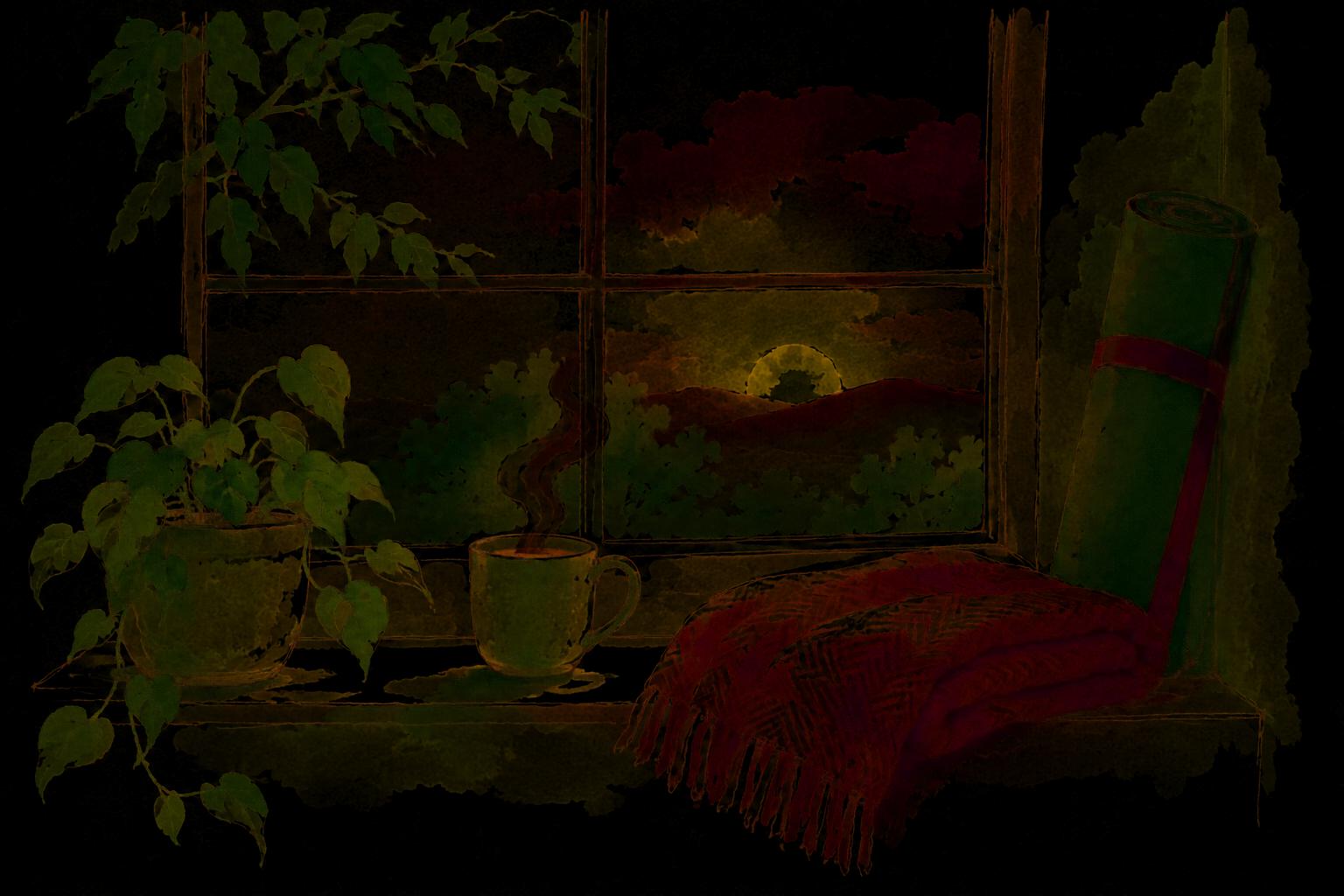
Learning how to be happy alone starts with telling two things apart: being alone, which is a circumstance, and being lonely, which is a feeling. Time on your own tends to feel good when you have chosen it, given it some shape and are kind to yourself while you are in it. Your own company is a relationship like any other, and it can be built a little at a time, at any age and in any situation.
I am a wellness coach and yoga teacher, and a good part of what keeps me well happens quietly: meditation in the morning, time with my own thoughts, work that needs a closed door. Liking my own company is something I learned slowly, not something I was born with. This piece is what I have found along the way.
Being alone is not the same as being lonely
You can be alone for a whole weekend and feel full. You can sit at a busy table and feel completely on your own. The difference is rarely the number of people. It is whether the time feels chosen and whether your own mind is good company.
| Chosen solitude | Loneliness |
|---|---|
| You picked it, or you have made peace with it | It feels imposed on you |
| You come out of it rested | You come out of it drained or flat |
| Your thoughts are mostly company | Your thoughts circle and criticize |
| You know who you could call if you wanted to | It feels as if there is no one |
Most of us move between the two columns. The aim is not to never feel lonely. It is to spend more of your time alone in the left-hand column, and to notice early when you have drifted into the right.
Your own company is a connection too
In my method, which I draw as a flower called the Starflower, each of seven petals is a "Right Action", one fundamental of health. The seventh is Right Connection. People hear that and think only of friends and family, which I wrote about in how to deal with loneliness. But the petal also holds your connection with yourself, with a sense of purpose, with animals and with the outdoors.
Of all of these, your relationship with yourself is the one that lasts your whole life. It is worth tending as carefully as any friendship. I have found I need both company and quiet, and that the quiet is where much of the real work gets done. As I put it in my book, Lifetime Body by Design, "The solitude feeds the substance."
How to enjoy being alone: make it chosen
Time alone that simply happens to you, because nobody called, tends to feel empty. The same hours, chosen, can feel like a gift. A few small shifts help.
- Name it. "This is my evening" lands differently from "nobody is free tonight".
- Plan it. Put time alone in your diary the way you would a lunch with a friend, with something in it you look forward to.
- Begin it on purpose. Make a cup of tea, take a few slow breaths, put the phone in another room. A small opening ritual tells your mind this time is yours.
- End it on purpose too. Close the book, wash the cup, step outside for a minute. Chosen time has edges.
Give your days on your own some shape
Solitude without any shape can drift into a long afternoon of screens that leaves you flatter than before. A loose rhythm helps a great deal, and it does not need to be strict.
I keep the same wake time every day, and that single habit gives the rest of the day something to hang on. Around it you might build a little movement, a proper meal, something to make or do, and a gentle wind-down at night. My morning routine is one example of how short that rhythm can be.
Meals are worth a special mention. Eating alone does not have to mean standing at the counter. Set a place at the table, cook something you like, sit by a window. Treat yourself as a guest you are glad to have.
If you want to understand how these small anchors become automatic, start with how to build good habits.
How to enjoy your own company: be good company to yourself
This is the heart of it. If the voice in your head is harsh, time alone will feel harsh. If it is fair and warm, time alone becomes a rest.
Speak to yourself as you would to a good friend. Notice the tone of your inner commentary, and soften it. My piece on positive self-talk goes into this.
Sit quietly for a few minutes a day. Some years ago I sat a ten-day silent Vipassana retreat. What stayed with me was learning to sit with whatever I felt, let it pass, and not build a story around it. You do not need a retreat for that. Ten minutes on a cushion or a chair, following the breath through the nose, is a fine start, and you can follow guided sessions live at Lifetime Body by Design.
Write it down. A page in a notebook about how the day really felt is a way of listening to yourself. If your thoughts tend to spiral when you are alone, read how to stop overthinking.
Fill your solitude with things that are alive
Being alone rarely means being without connection altogether. Some of the warmest kinds need no one else in the room.
- Something to look after: a plant, a vegetable bed, a project that waits for you each morning.
- An animal: your own, a neighbor's dog to walk, or a volunteer shift at a shelter.
- The outdoors: a walk under trees, a bench near water, the evening light. Many people find their mind settles outside in a way it does not indoors.
How to live alone and be happy
If you live on your own, a few habits keep solitude on the good side of the line.
- Keep small contact in every day. A real hello to a neighbor or the person at the till is enough to start.
- Have one regular thing each week with other people: a class, a walking group, a volunteer shift.
- Know your harder hours. For many people it is Sunday evening or a holiday. Plan something for them in advance rather than hoping.
- Keep two names handy, people you could call on a bad day, and tell them they are on your list.
Time alone is not a gap waiting to be filled. It is company of a different kind.
When solitude tips into loneliness
Even well-loved solitude can tip over. Watch for weeks passing without a real conversation, dreading the evenings, losing interest in things you used to enjoy, or changes in your sleep or appetite. When you notice these, reach out to someone, even briefly.
If low mood lasts more than a couple of weeks, please speak to your doctor. That is a health matter, not a failure of character. If you are having thoughts of harming yourself, contact your doctor, a local crisis line or emergency services now.
A few questions people ask me
Is it normal to prefer being alone? Yes. Many people feel most like themselves with plenty of quiet and a few close connections. It only becomes a concern if it starts to feel like hiding, or your mood is sliding.
How do I start enjoying my own company if I never have? Start small. Twenty minutes, chosen, with something pleasant in it and the phone in another room. Lengthen it as it gets easier.
Can you be happy alone for a long time? Many people are. Most of us still need some contact with others, though, so check honestly whether yours is enough.
How do I stop weekends alone feeling long? Give them a shape: one plan with people, one thing just for you, and a walk outdoors.
There is more on the seventh petal under Right Connection, starting with how to deal with loneliness. For the people side, read how to be a good friend.
This article is general information and one person's experience. It is not medical or mental health advice. If you are struggling with low mood or loneliness that will not lift, or with thoughts of self-harm, please speak to your doctor.
Carol Pocock is a wellness coach, yoga teacher and the author of Lifetime Body by Design. Guided sessions are at Lifetime Body by Design. More about Carol.

