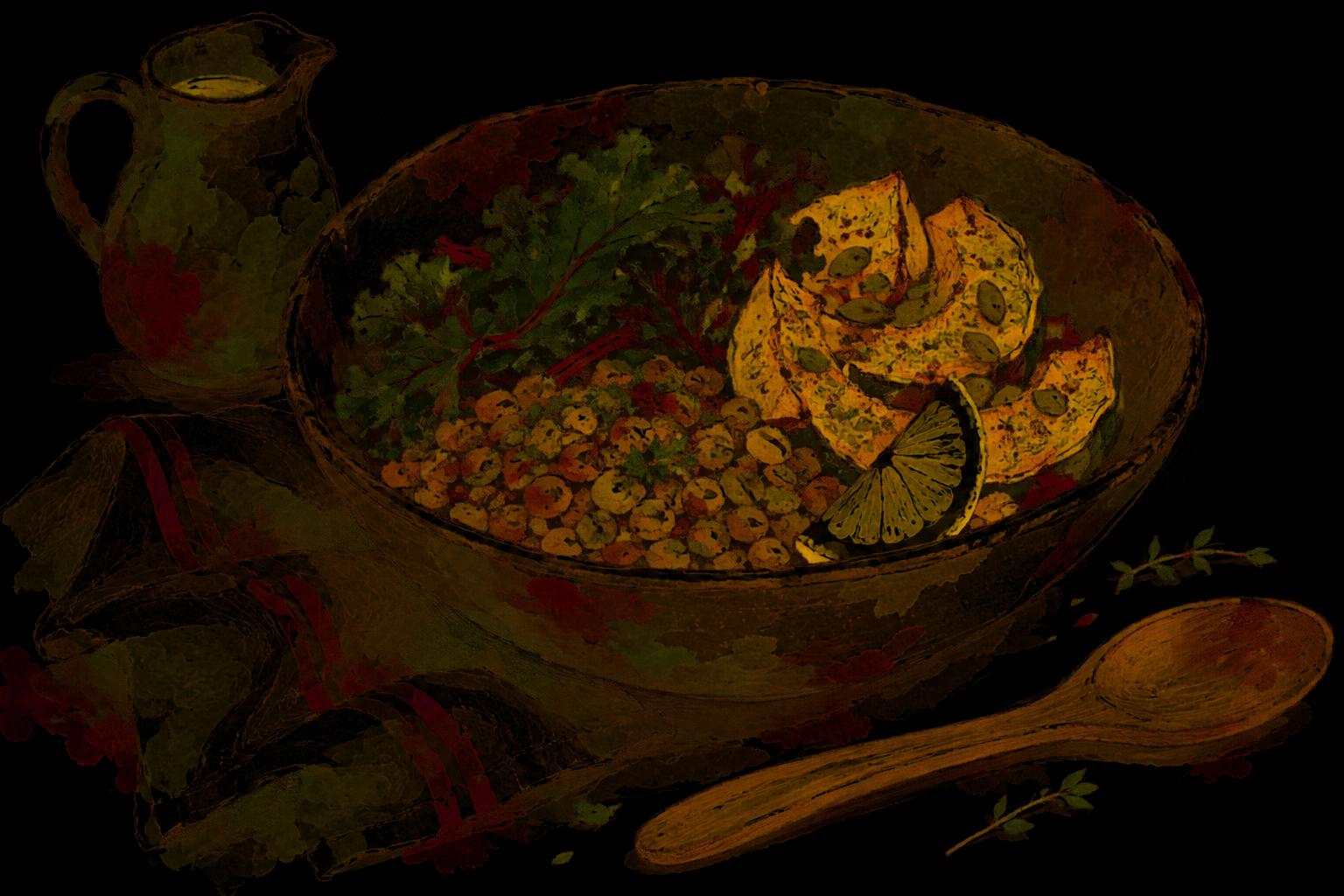
Vegans eat everything that grows: vegetables, fruit, beans, lentils, whole grains, nuts and seeds, and the ordinary foods made from them, such as bread, pasta, tofu, peanut butter and hummus. So the answer to "what do vegans eat?" is mostly food you already know. What is missing is meat, fish, dairy, eggs and, for most vegans, honey. A vegan kitchen looks much more like yours than you might expect.
I am a wellness coach, and I have eaten whole-food, plant-based for about thirty years, with no meat or dairy. People who do not eat this way often ask me what I actually eat. This piece is my answer for the curious. If you already eat this way and want the shopping, my vegan grocery list has it aisle by aisle, and if you want seven days of meals to follow, see the plant-based meal plan. Here I want to show the ordinary picture: what goes in, what stays out and how a week actually runs.
What can vegans eat? A plain vegan food list
Most of the store is open. Grouped the way I think about it:
- Vegetables, all of them: greens, roots, squash, cabbage, onions, mushrooms, peppers, tomatoes, potatoes.
- Fruit, fresh, frozen or dried with nothing added.
- Beans and lentils: chickpeas, black beans, kidney beans, red and green lentils, split peas. These are the backbone.
- Soy foods: tofu, tempeh, edamame and unsweetened soy milk.
- Whole grains: oats, brown rice, barley, quinoa, buckwheat, whole wheat pasta and bread.
- Nuts and seeds: walnuts, almonds, cashews, pumpkin seeds, sesame and ground flaxseed, and the butters made from them.
- Flavor: herbs, spices, garlic, ginger, lemon, vinegar, mustard, soy sauce, miso and nutritional yeast.
If you have ever eaten a bean chili, a vegetable curry, a bowl of oatmeal or a peanut butter sandwich, you have already eaten a vegan meal without anyone calling it that.
What vegans leave out, and where animal foods hide
The obvious ones are meat, poultry, fish and seafood, milk, cheese, butter, cream, yogurt and eggs. Most vegans also skip honey.
The less obvious ones are what make label reading worth a few weeks of effort:
- Whey and casein, both from milk, in bread, crackers, cereal bars and "non-dairy" creamers.
- Gelatin, from animal bones and skin, in sweets, marshmallows and some desserts.
- Egg in fresh pasta, some noodles, mayonnaise and baked goods.
- Fish sauce and anchovies in curry pastes, Caesar dressing and some Worcestershire sauce.
- Butter or ghee brushed on breads and pastries, or stirred into restaurant vegetables.
After a month you know which brands you buy, and it takes no thought at all. If the different labels for different diets are confusing, I set them side by side in vegan vs vegetarian.
Can vegans eat bread?
Yes, and most bread is vegan: flour, water, yeast and salt. Some loaves add milk, butter, eggs or honey, and enriched breads such as brioche usually do. Check the ingredients for those, and for whey.
My own test is a little stricter. I look for a whole-grain loaf with a short ingredient list, no added sugar and no seed oils. That rules out a surprising number of breads that are perfectly vegan, which is the difference between vegan food and whole food.
What do vegans eat for breakfast?
Breakfast is the easiest meal to make vegan, because so many breakfasts already are.
- Oatmeal cooked with fortified soy milk, with fruit, nuts and ground flaxseed on top.
- Whole-grain toast with peanut butter and banana, or avocado and tomato.
- Tofu crumbled and cooked with onion, spinach, turmeric and a little soy sauce, the plant answer to scrambled eggs.
- Plain unsweetened soy yogurt with berries and seeds.
- Last night's leftovers, which is more common than you would think.
For mornings that need to hold you until lunch, I gathered some in high-protein vegan breakfasts.
What vegans eat instead: easy swaps
Curious cooks usually want to know what fills the gap. Most of the time, nothing needs to: a bean stew does not miss the meat it never had. When a recipe does lean on an animal food, these are the swaps I reach for.
| Instead of | I use |
|---|---|
| Ground meat in chili or sauce | Lentils or beans, or both |
| Scrambled eggs | Crumbled tofu with turmeric and greens |
| Cow's milk | Fortified, unsweetened soy milk |
| Butter on toast | Nut butter, mashed avocado or a little olive oil |
| Grated cheese | Nutritional yeast, or a sauce of blended cashews |
| Cream in soup | Blended white beans or a handful of soaked cashews |
| Egg in baking | Ground flaxseed stirred into water and left to thicken |
| Ice cream | Frozen banana blended until smooth |
You will notice what is not on the list: ready-made vegan meats and cheeses. They are vegan, but they are heavily processed, so I leave them on the shelf.
An ordinary week in my kitchen
This is the honest answer to "but what do you actually eat?" It is less a menu than a rhythm, and the rhythm is what keeps it easy.
At the start of the week I cook in bulk: a big pot of soup or stew, a pot of beans or lentils, a pot of grains and a tray of roasted vegetables. That one session feeds most of the week.
Most days there is a big salad: a bowl of greens with raw and roasted vegetables, a can of beans or some leftover tofu, seeds, and lemon and tahini. It changes with whatever is in the fridge.
Most evenings dinner is built from the week's pots: lentils and greens over rice, beans folded into a tomato sauce with whole wheat pasta, or a curry from the leftover vegetables.
Toward the end of the week whatever vegetables are left go into soup rather than the compost, and the freezer covers the rest.
At the weekend I cook something slower for the pleasure of it.
There is a lot of repetition in it, and I do not mind. Repetition is what turns a way of eating into a habit you no longer think about, the same way any habit takes root. I wrote about that in how to build good habits. Cooking is also only one part of the day: a short walk after dinner belongs to a different petal, Right Movement, and I wrote about it in walking for exercise.
Vegan food is not always whole food
In my book, Lifetime Body by Design, food is Right Feeding, the second petal of the Starflower. Each petal is a "Right Action", one part of a healthy life practiced until it is ordinary. My version is whole-food, plant-based: as well as no meat or dairy, there is no added sugar and no seed oils, extra virgin olive oil is used in moderation, and the food is mostly whole and minimally processed.
That matters because a great deal of vegan food is candy, chips, white bread and packets. A curious outsider looking at the vegan shelf of a supermarket would get quite the wrong idea of how I eat. Most of my week is beans, vegetables, grains and fruit, cooked simply.
A vegan kitchen is mostly an ordinary kitchen with fewer things in the fridge.
The nutrients worth planning for
The NHS says plainly that sources of vitamin B12 for vegans are limited and a supplement may be needed, and lists fortified breakfast cereals, fortified unsweetened soy drinks, yeast extract and nutritional yeast flakes as options. Calcium, iodine, vitamin D, iron and omega-3 fats are also worth thinking about, and my pillar piece on how to go plant-based has a table of where each comes from.
Please speak to your doctor or a registered dietitian before changing how you eat, especially if you are pregnant, have a health condition or take regular medication. For guided sessions on the other petals, such as movement and breath, visit Lifetime Body by Design.
A few questions people ask me
Do vegans eat eggs or fish? No. Neither eggs nor fish are part of a vegan diet. Someone who eats fish but no other meat is a pescatarian.
Where do vegans get protein? From beans, lentils, tofu, tempeh, edamame, nuts, seeds and whole grains. I plan every meal around one of them.
Is it hard to eat out as a vegan? Less than it used to be. Indian, Middle Eastern, Thai and Mexican menus often have good options, and most kitchens will leave off the cheese if you ask.
What do I cook for a vegan guest? A bean chili, a vegetable curry with rice, or pasta with a tomato and white bean sauce. Check the stock cube and the bread, and you are done.
There is more from my kitchen under Whole food nutrition. If you are thinking of trying it yourself, start with how to go plant-based.
This article is general information and one person's experience. It is not medical or dietary advice. Please speak to your doctor or a registered dietitian before making significant changes to how you eat.
Carol Pocock is a wellness coach, yoga teacher and the author of Lifetime Body by Design. Guided sessions are at Lifetime Body by Design. More about Carol.

