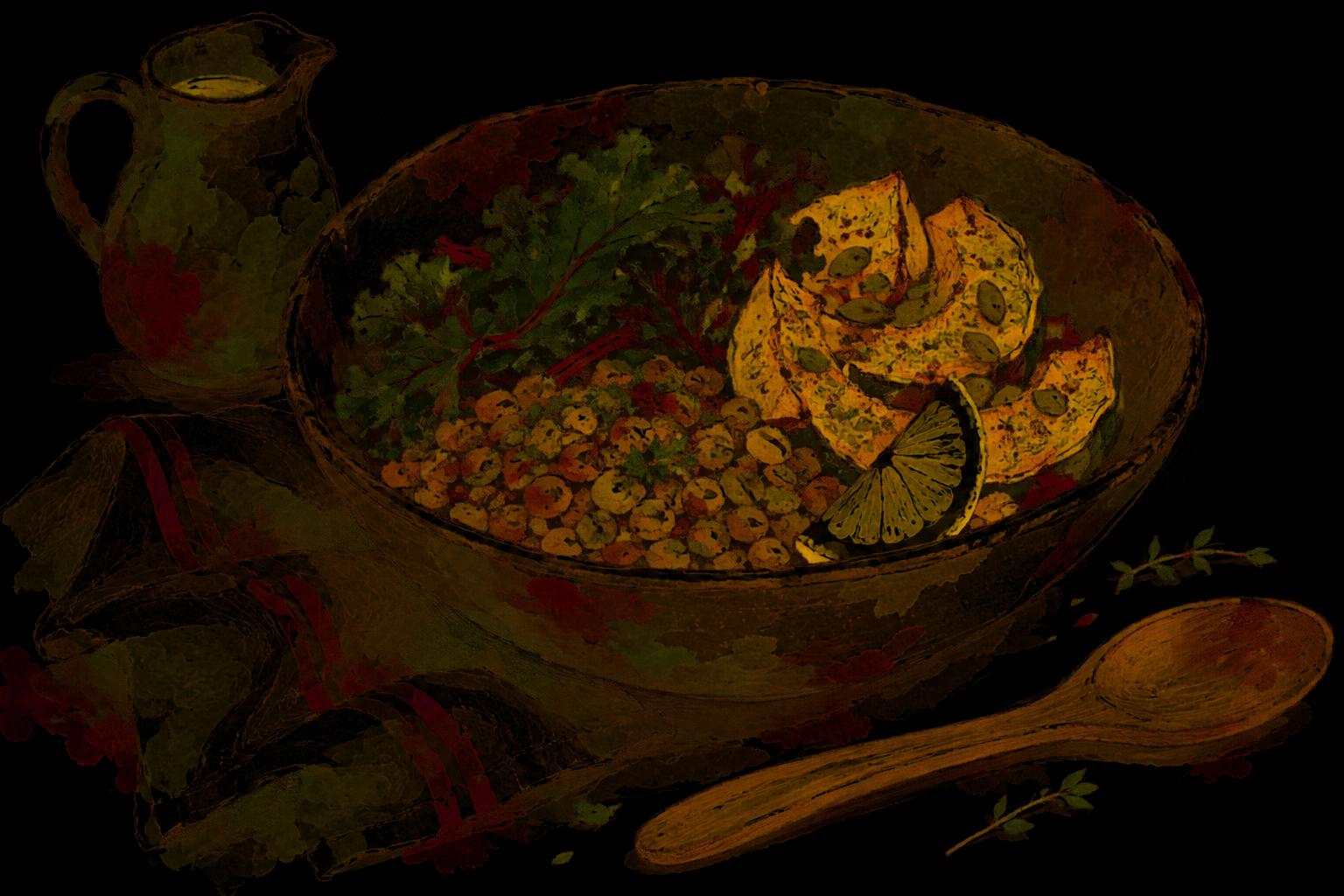
To cut a butternut squash, trim both ends so it has two flat faces, cut across where the narrow neck meets the round bulb, and stand each piece on a flat face before you cut it again. Peel with a sturdy Y-shaped peeler, scoop the seeds from the bulb, then slice and cube. If it feels too hard to cut, prick it and microwave it for a few minutes first. The squash only fights you when it can roll, so every step here is about keeping it still.
I am a wellness coach, and I have eaten whole-food, plant-based for about thirty years, with no meat or dairy. Butternut squash is one of the vegetables I buy most often in the colder months, and I have watched plenty of people give up on it at the cutting board. This piece is only about the knife work. Once it is cut, my guide to how to cook butternut squash has the roasting, steaming and times, so I will not repeat them here.
Why butternut squash is hard to cut
A butternut squash is dense, round on one end, smooth-skinned and often a little curved, so on a board it wants to rock and slide away from the blade. Trouble usually comes from one of three things: it rolls, the knife sticks halfway and gets levered with force, or the knife is too small or dull and needs too much pressure. Fix those and it becomes an ordinary job.
What you need, and knife safety first
- A large chef's knife, about 8 to 10 inches (20 to 25 cm), and sharp. A sharp knife bites into the skin instead of skidding off it.
- A big, heavy cutting board. Put a damp cloth or a sheet of damp paper towel under it so it cannot slide.
- A sturdy Y-shaped vegetable peeler. Many people find it easier on thick skin.
- A metal spoon, for the seeds. A grapefruit spoon or an ice-cream scoop works too.
A few habits keep your fingers safe:
- Make a flat side before any other cut, and keep that flat side on the board.
- Keep your holding hand on top of the squash, palm flat, fingers curled away from the blade, never in front of it.
- If the knife sticks, stop. Do not twist it or rock it from side to side. Pull it out gently, or tap the back of the blade with the heel of your other hand while the squash sits flat.
- Go slowly. There is no prize for speed with a hard vegetable.
How to soften squash to cut it
If your hands or wrists find the raw squash hard going, soften it a little first. This is the trick that turns most people around.
In the microwave. Wash the squash, trim the stem, and prick the skin all over with a fork or the tip of a knife, about eight or ten times, so steam can escape. Microwave it whole for about two to four minutes, depending on its size and your microwave. It will not be cooked, only less stubborn, and the skin will give a little under the knife and the peeler. Let it cool until you can hold it comfortably. It will be hot near the skin, so use a cloth to move it.
In the oven. If you have no microwave, put the pricked squash on a tray in a hot oven for 10 to 15 minutes. Again, you are softening, not cooking.
Or skip the raw cutting altogether. You can roast a butternut squash whole until it is soft, then halve it like a baked potato and scoop it out. The method and time are in how to cook butternut squash. It suits mash or soup well, though not neat cubes.
How to cut a butternut squash, step by step
- Wash and dry it.
- Trim both ends. Lay it on its side and cut a thin slice, about ¼ inch (6 mm), off the stem end and off the round bottom.
- Split the neck from the bulb. Cut straight across where the narrow neck widens into the round part. You now have two shorter, steadier pieces, each with a flat end.
- Stand each piece on its flat end and peel. Work the peeler from top to bottom, turning the piece as you go (see below).
- Halve the bulb. Stand it on its flat end and cut straight down through the middle. Scoop out the seeds and the stringy pulp.
- Halve the neck lengthwise. Lay each half flat side down. The neck is solid flesh, with no seeds, and gives you the tidiest pieces.
Flat side down, every time. A squash that cannot roll cannot surprise you.
How to peel butternut squash
Peel after you split the squash into neck and bulb, while each piece can stand on a flat end. Shorter pieces are much easier to steady than one long, curved squash.
Run the peeler in long strokes from top to bottom. Butternut has two layers to remove: the thin tan skin, and just beneath it a paler, slightly greenish layer that stays tough even when cooked. Keep peeling until you reach even, bright orange flesh all over. A knife works if you have no good peeler: stand the piece on its flat end and cut the skin away in strips, top to bottom, following the curve.
Some people find the raw squash leaves their hands dry, tight or slightly sticky after peeling. If that happens to you, wear kitchen gloves next time and wash your hands afterward.
You do not always need to peel. If you are roasting halves or thick slices, the skin can stay on and many people eat it once it is soft.
How to cube butternut squash, and other cuts
Once each piece lies flat side down, the rest is simple. Cut the halves into planks, lay the planks flat, cut them into sticks, then cut across the sticks.
| Cut | How | Good for |
|---|---|---|
| Large cubes, about 1 inch (2.5 cm) | Planks, then sticks, then across | Roasting, stews, curries |
| Small dice, about ½ inch (1 cm) | Thinner planks and sticks | Soups, grain bowls, quicker cooking |
| Half-moons | Bulb halves, seeded, sliced across | Roasting with the skin on |
| Rounds | The peeled neck, sliced across | Roasting flat on a tray |
| Wedges | Unpeeled halves cut lengthwise | A simple side dish, skin on |
Try to keep the pieces about the same size, so they cook evenly. The neck gives you neat cubes; the curved bulb gives some odd shapes, which are perfect for soup. My butternut squash soup is a good home for the irregular bits.
Storing cut squash and making it a habit
A whole butternut squash keeps for weeks in a cool, dry spot. Once cut, raw squash goes in a sealed container in the fridge, and I use it within a few days. Peeled cubes also freeze well spread on a tray, then bagged; they soften after thawing, so they suit soups and stews best.
This is where the knife work pays off. In my book, Lifetime Body by Design, food is Right Feeding, the second petal of the Starflower. Each petal is a "Right Action", one part of a healthy life practiced until it becomes ordinary. I set out the whole petal in how to go plant-based. Much of Right Feeding is simply having good food ready when you are hungry, and a container of cut squash in the fridge does exactly that.
Many people find it easiest to cut one squash on the same day each week, alongside their other prep. Once your hands know the steps it takes about fifteen minutes, and the next few dinners are half made. Small, repeated tasks like this are the stem of the method, Right Habits, which I wrote about in how to build good habits. Cutting slowly with full attention is also a quiet few minutes in a busy day, the idea behind how to be present. For guided sessions across the whole method, see Lifetime Body by Design.
A few questions people ask me
Do I need to peel butternut squash? Only for neat cubes, dice or mash without skin. For roasted halves, wedges or half-moons, leave the skin on.
How long should I microwave a squash before cutting it? About two to four minutes for a whole squash, pricked first. It varies with the size and the microwave, so start short. You only want it to give a little.
Which part is easiest to cut? The neck. It has no seeds and cuts into even cubes. Start there if you are nervous.
My knife got stuck. What now? Leave the squash flat on the board, keep your fingers clear, and either pull the knife straight out or tap the back of the blade gently with the heel of your hand. Never lift the squash with the knife still in it.
There is more from my kitchen under Whole food nutrition. Once your squash is cut, turn to how to cook butternut squash or make a pot of butternut squash soup.
This article is general information and one person's experience. It is not medical or dietary advice. Please speak to your doctor or a registered dietitian before making significant changes to how you eat.
Carol Pocock is a wellness coach, yoga teacher and the author of Lifetime Body by Design. Guided sessions are at Lifetime Body by Design. More about Carol.

