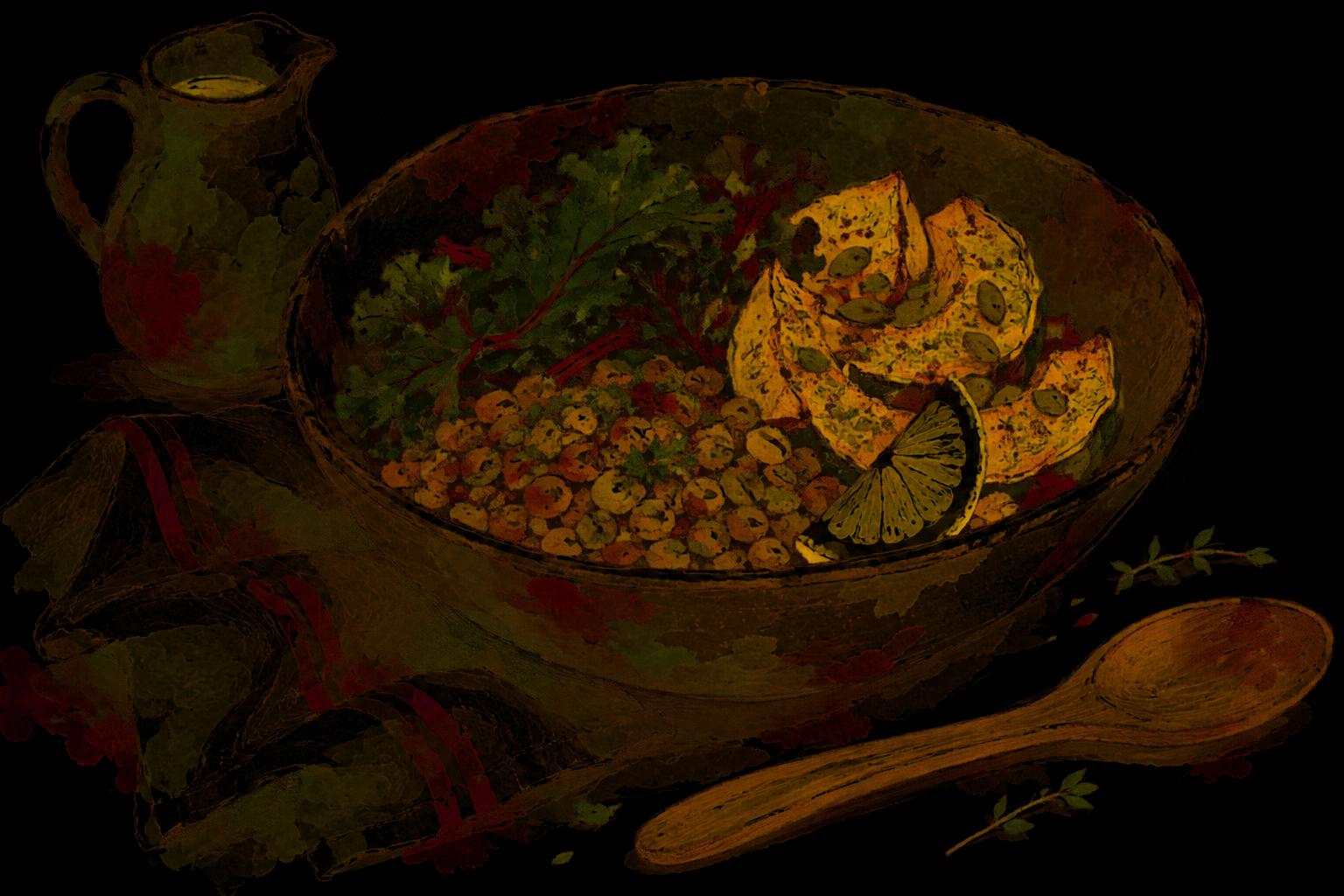
What are whole foods? They are foods still close to how they grew, with little or nothing added or taken away: a potato rather than a bag of chips, oats rather than a frosted cereal, a handful of peanuts rather than a peanut candy bar. A whole food diet is one built mostly from those, with lightly processed foods where they make life easier and heavily processed ones kept to the edges. (In case a search brought you here by another route: this is about food, not the grocery chain with a similar name.)
I am a wellness coach, and I have eaten whole-food, plant-based for about thirty years, with no meat or dairy. Before that I spent years yo-yo dieting, counting calories and buying anything with "light" on the front of the packet. What finally changed things was not a better diet. It was a better question. I stopped asking how many calories something had and started asking what it actually was, and how far it had traveled from the field.
Where whole foods sit in the Starflower
My method, Lifetime Body by Design, is drawn as a flower I call the Starflower. Each of its seven petals is a "Right Action", one part of a healthy life you can work on a little at a time, and the stem that holds them up is Right Habits. Right Feeding is the second petal, shown on this site as Whole food nutrition.
If you want the bigger picture of how I eat, start with how to go plant-based. This piece is narrower. It is about the one idea underneath the whole petal: learning to tell a whole food from a food product, quickly, in an ordinary store on an ordinary day.
A plain definition of whole foods
I use two questions.
- Did it grow like this, or close to it? A carrot, a lentil, an apple, a walnut. Yes.
- Has anything been added or taken away? Added means sugar, oil, salt, flavorings, colors or thickeners. Taken away usually means fiber, the bran of a grain or the skin of a fruit.
If the answers are "yes" and "not much", it is a whole food.
Processing is not a dirty word. Chopping, cooking, freezing, canning, grinding and fermenting are all processing, and most of us do several of them before breakfast. Rolled oats are processed. So is tofu. The useful question is not whether a food has been processed, but how much, and what was done to it along the way.
The closer a food is to the field, the less you need to read about it.
Whole, lightly processed and heavily processed
This is the table I wish someone had handed me years ago. The middle column matters most, because that is where real cooks live.
| Whole | Lightly processed and still fine | Heavily processed |
|---|---|---|
| Apples | Unsweetened applesauce, frozen apple slices | Apple pastries, apple-flavored fruit snacks |
| Potatoes | Plain frozen potato wedges | Potato chips, instant mashed potato mix |
| Oat groats | Rolled oats, steel-cut oats | Frosted oat cereal, oat snack bars |
| Dried chickpeas | Canned chickpeas, plain hummus | Flavored chickpea puffs |
| Soybeans | Tofu, tempeh, unsweetened soy milk | Plant-based burgers and sausages |
| Tomatoes | Canned tomatoes, tomato puree | Ketchup and jarred sauces with added sugar |
| Peanuts | Peanut butter made only from peanuts | Peanut butter cups, sweetened nut spreads |
| Wheat berries | Whole-grain flour, a whole-grain loaf with a short list | Soft white sandwich bread, packaged pastries |
| Spinach | Frozen spinach | Spinach-flavored crackers |
Frozen and canned food is not second best. Frozen vegetables are often frozen soon after picking, and a can of beans has saved more of my weeknights than any cookbook. What pushes a food into the right-hand column is a long list of things you would not keep in your own kitchen.
How to read a label in ten seconds
You do not need a degree in nutrition. You need a habit, and it gets faster each time.
- Count the ingredients. One ingredient, or a short list you could make at home, is a good sign.
- Read the first three. In the US, Canada and the UK, ingredients are listed by weight, largest first. If sugar, white flour or oil is in the top three, the food sits toward the heavy end.
- Look for sugar under other names. High fructose corn syrup, dextrose, maltose, barley malt, fruit juice concentrate, maple syrup and molasses are all added sugar. Most words ending in "-ose" are sugars too.
- Check the added sugars line. On a US Nutrition Facts panel there is a separate line for added sugars. For most everyday foods, I am looking for zero.
- Ignore the front of the box. "Natural", "wholesome", "made with whole grains" and "plant-based" are marketing. The back tells you what is in it.
After a week or two of doing this, you will find you only need to read new things. Everything else you already know.
My own line on oil, sugar and salt
This is my practice, not a rule for you. I share it because people ask, and because it helps to see where one person has drawn the line.
- Sugar: I avoid added sugar. Sweetness in my kitchen comes from fruit, and when I bake I use dates. I would rather eat a ripe pear than a pear tart.
- Oil: I avoid seed oils, such as sunflower, canola, corn and soybean oil. I use extra virgin olive oil, in moderation, for dressings and roasting. People argue about seed oils, and you do not have to agree with me to use the rest of this piece.
- Salt: I cook with a little. Most of the salt many of us eat arrives already inside processed food, so cooking mostly from whole foods keeps it lower without much thought.
How to stop eating processed food without emptying the cupboards
Most of us do not buy processed food because we love it. We buy it because it is there, it is quick and it was on offer. So the fix is less about willpower and more about making whole food the convenient choice.
- Change one category a week. Drinks one week, breakfast the next, then snacks, then sauces and dressings, then bread. A single category is small enough to notice and easy to keep.
- Let things run out. You do not need to throw anything away. As a packet empties, replace it with something from the middle column of the table above.
- Build your own convenience. A pot of cooked brown rice in the fridge, a few cans of beans, a bag of frozen vegetables and a bowl of washed fruit on the counter will compete with almost any packet.
- Find five meals. Once you have five whole-food meals you can make without a recipe, most of the week takes care of itself. My high-protein vegan meals are a good place to look.
Right Feeding follows Right Thinking in the Starflower for a reason. The "all or nothing, start again on Monday" voice is usually a bigger obstacle than the food itself. I wrote about that in how to change your mindset, and about making any of this stick in how to build good habits.
Five easy swaps to eat more whole foods
If you want to know how to eat more whole foods starting this week, begin with these. Each one is a straight exchange, and none needs a new recipe.
- Flavored yogurt becomes plain, unsweetened plant yogurt with a handful of berries.
- Boxed breakfast cereal becomes rolled oats with cinnamon and chopped fruit.
- Bottled salad dressing becomes extra virgin olive oil, lemon juice or vinegar, a crushed garlic clove and a pinch of salt, shaken in a jar.
- Chips with lunch becomes a handful of nuts, or chickpeas roasted in the oven until crisp.
- Fruit juice becomes a piece of whole fruit and a glass of water.
Many people find meals built this way keep them satisfied for longer, and whole foods usually keep their fiber, which may help digestion. If you want company while you change things, my guided sessions live at Lifetime Body by Design.
A few questions people ask me
Is a whole food diet the same as a whole food plant based diet? Not quite. A whole food diet can include fish, eggs or meat, as long as the food is close to how it started. A whole-food, plant-based diet leaves animal foods out as well. That is how I eat, and I explain it in how to go plant-based.
Are frozen and canned foods whole foods? Most are lightly processed and perfectly good. Check canned vegetables and beans for added salt or sugar, and rinse beans if you like.
Do whole foods cost more? They do not have to. Dried lentils, oats, potatoes, cabbage, carrots and canned tomatoes are among the cheapest things in any store. My vegan grocery list shows what that looks like in a real week.
Do I have to cut out processed food completely? No. Aim for most of your plate, most days. A little of the heavy end now and then is part of ordinary life, and guilt about it does more harm than the food.
More on the second petal is under Whole food nutrition. If added sugar is the hardest part for you, read how to quit sugar next.
This article is general information and one person's experience. It is not medical or dietary advice. Please speak to your doctor or a registered dietitian before making significant changes to how you eat, especially if you have a health condition or take regular medication.
Carol Pocock is a wellness coach, yoga teacher and the author of Lifetime Body by Design. Guided sessions are at Lifetime Body by Design. More about Carol.

