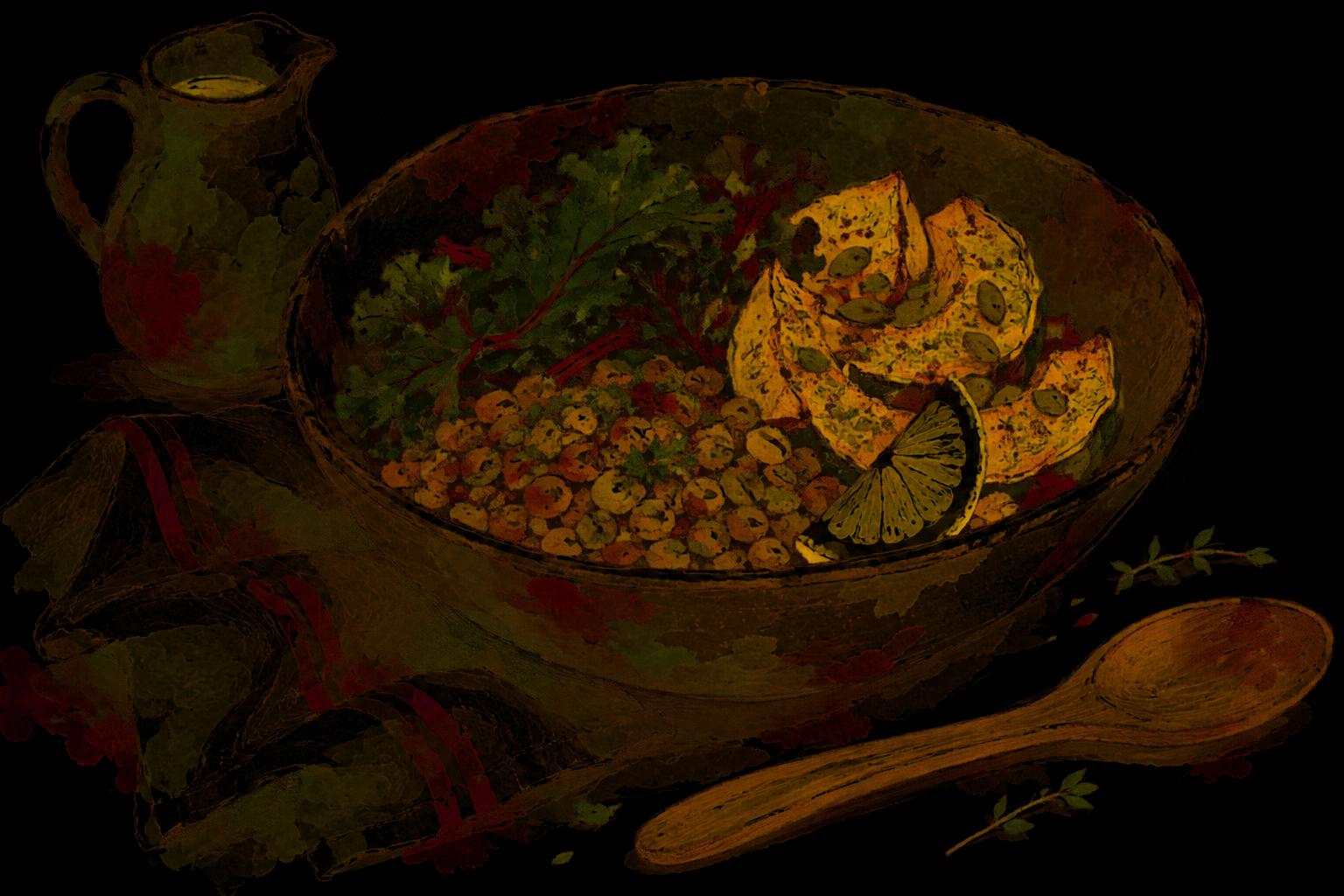
A simple dal recipe has two parts. First you simmer red lentils in water with a little turmeric until they collapse into a thick, golden purée, which takes about twenty to twenty-five minutes. Then you warm cumin seeds, onion, garlic and ginger in a separate pan and stir them into the lentils just before serving. That second step is what turns a pot of lentils into dal, and the whole thing takes about forty minutes, mostly unattended.
I am a wellness coach, and I have eaten whole-food, plant-based for about thirty years, with no meat or dairy. If someone asked me for the one dish that would make them comfortable cooking without meat, it would be this one: cheap, forgiving, made from cupboard staples, and good enough that nobody thinks of it as a compromise. Food is Right Feeding, the second petal of the Starflower, the method in my book, Lifetime Body by Design. If you are new to lentils, I set out the basic types and times in how to cook lentils, and I will not repeat that table here.
What dal is
In South Asian cooking, the word dal covers both the dried split pulses themselves, such as lentils, split peas and split beans, and the dish made from them. It is everyday food across a very large region, made in countless ways from family to family, and there is no single correct version. What I give here is a simple home version, adapted to the way I eat. Cooks who grew up with dal will make it differently, and their way is worth learning if you get the chance.
My adaptation is mainly in the fat. Dal is often finished with ghee, which is clarified butter, or with a cooking oil. I leave out the ghee because it is dairy, and I use a small spoon of extra virgin olive oil, or toast the spices dry.
How dal differs from lentil soup
I also make lentil soup, and people sometimes ask whether dal is just a thicker version. It is not, quite.
- Thickness. Dal is closer to a thick sauce than a soup. You spoon it over rice or scoop it up with bread.
- The lentils. Dal is usually made with split pulses, which break down. My soup uses brown or green lentils that hold their shape.
- The finish. Soup builds its flavor at the start, with vegetables softened in the pot. Dal saves its strongest flavor for the end, with spices warmed separately and poured in. That finishing step is often called a tadka or tempering.
My everyday red lentil dal
This makes about four servings. Cooking for one or two, I eat it twice and freeze the rest.
For the lentils
- 1 cup (about 200 g) red lentils
- 3 to 3½ cups (about 700 to 800 ml) water
- ½ teaspoon ground turmeric
For the finish
- 1 tablespoon extra virgin olive oil, or a dry pan
- 1 teaspoon cumin seeds
- 1 onion, finely chopped
- 3 cloves garlic, chopped
- A thumb of fresh ginger, grated
- 1 small green chili, sliced, or a pinch of chili flakes (optional)
- 1 teaspoon ground coriander
- 2 tomatoes, chopped, or half a 14 oz (400 g) can
- ½ teaspoon garam masala
To serve
- Juice of half a lemon
- A handful of chopped cilantro
- Salt to taste
Method
- Rinse the lentils in a sieve until the water runs mostly clear, and pick out any small stones.
- Put them in a pot with 3 cups of the water and the turmeric. Bring to a boil, skim off any foam, then turn it down to a gentle simmer and half cover.
- Simmer for about 20 to 25 minutes, stirring now and then, until the lentils have fallen apart. Add more water if it gets thicker than you like. Times vary with the age of the lentils, so taste rather than watch the clock.
- While the lentils cook, make the finish. Warm the olive oil in a frying pan over medium heat, or use the pan dry. Add the cumin seeds and let them sizzle and darken slightly for about thirty seconds. If you are using a dry pan, shake it and keep a close eye on them.
- Add the onion and cook for about eight to ten minutes until soft and golden. In a dry pan, add a spoonful of water whenever it starts to stick.
- Add the garlic, ginger and chili and stir for a minute. Add the ground coriander and stir for a few seconds more.
- Add the tomatoes and cook for about five minutes, until they break down into a thick, jammy mixture.
- Tip the whole pan into the lentils, add the garam masala and simmer together for two or three minutes.
- Off the heat, add the lemon juice and cilantro, then taste and season with salt.
Whole spices burn quickly. If your cumin seeds turn black and smell acrid, start the pan again. It costs you a teaspoon of seeds and saves the pot.
Simmer the lentils plainly, and save the flavor for the end.
Other split pulses to try
Once red lentils feel easy, other split pulses give different textures. They take longer, and the times below are only a rough guide: they vary a great deal with the age of the pulses and your pot.
| Split pulse | Soaking | Approximate simmering time | What it is like |
|---|---|---|---|
| Red lentils | Not needed | 20 to 25 minutes | Soft, creamy and quick |
| Split mung beans (yellow) | Not needed; a short soak helps | 25 to 35 minutes | Light and mild |
| Yellow split peas | Optional, a few hours | 45 to 60 minutes | Earthy and thick |
| Split pigeon peas (often sold as toor dal) | A few hours helps | 45 minutes to over an hour | Rich and smooth |
| Split chickpeas (often sold as chana dal) | A few hours helps | About an hour or more | Nutty; they hold a little shape |
Many cooks use a pressure cooker for the slower ones, which shortens the time a great deal. Follow the instructions for your own cooker.
Ways to vary it
The same finish works with plenty of additions.
- With greens: stir a few large handfuls of spinach or chopped kale into the dal for the last two minutes. I wrote about cooking both in how to cook spinach and kale.
- With vegetables: add diced carrot, squash or sweet potato to the lentils at the start.
- Thinner: add hot water until it pours, for a bowl to eat with a spoon.
- Milder: leave out the chili and garam masala. The cumin, ginger and lemon are enough.
What to eat with dal
Brown rice is my usual, cooked as I describe in how to cook brown rice. A whole wheat flatbread works too, and so do a simple salad of cucumber and tomato, or a pan of greens alongside. Dal keeps for about three or four days in the fridge once cooled and covered, and it freezes well in portions. It thickens as it sits, so loosen leftovers with a splash of hot water as you reheat them.
Making dal regularly is a small, repeatable habit, which is why it lasts. I wrote about that in how to build good habits. It is also a pleasant thing to cook slowly, paying attention to the smell of the spices rather than rushing, which is close to what I mean in how to be present. For guided sessions across the whole method, see Lifetime Body by Design.
A few questions people ask me
Do I need to soak lentils for dal? Not red lentils. Rinse them and they are ready. Some of the larger split pulses cook more evenly after a few hours' soak.
Why does my dal taste flat? Usually it needs salt and lemon at the end, or the spices were not warmed long enough. The tempering step is where most of the flavor comes from, so do not skip it.
Can I make dal without oil? Yes. Toast the cumin seeds in a dry pan, then soften the onion with spoonfuls of water. The flavor is a little lighter, but still good.
Is dal filling enough for a meal? For me, yes, with rice and a vegetable. If you are new to lentils, start with a smaller bowl and build up, and if you have a digestive condition, ask your doctor first.
There is more from my kitchen under Whole food nutrition, and if you are just starting out, begin with how to go plant-based.
This article is general information and one person's experience. It is not medical or dietary advice. Please speak to your doctor or a registered dietitian before making significant changes to how you eat.
Carol Pocock is a wellness coach, yoga teacher and the author of Lifetime Body by Design. Guided sessions are at Lifetime Body by Design. More about Carol.

