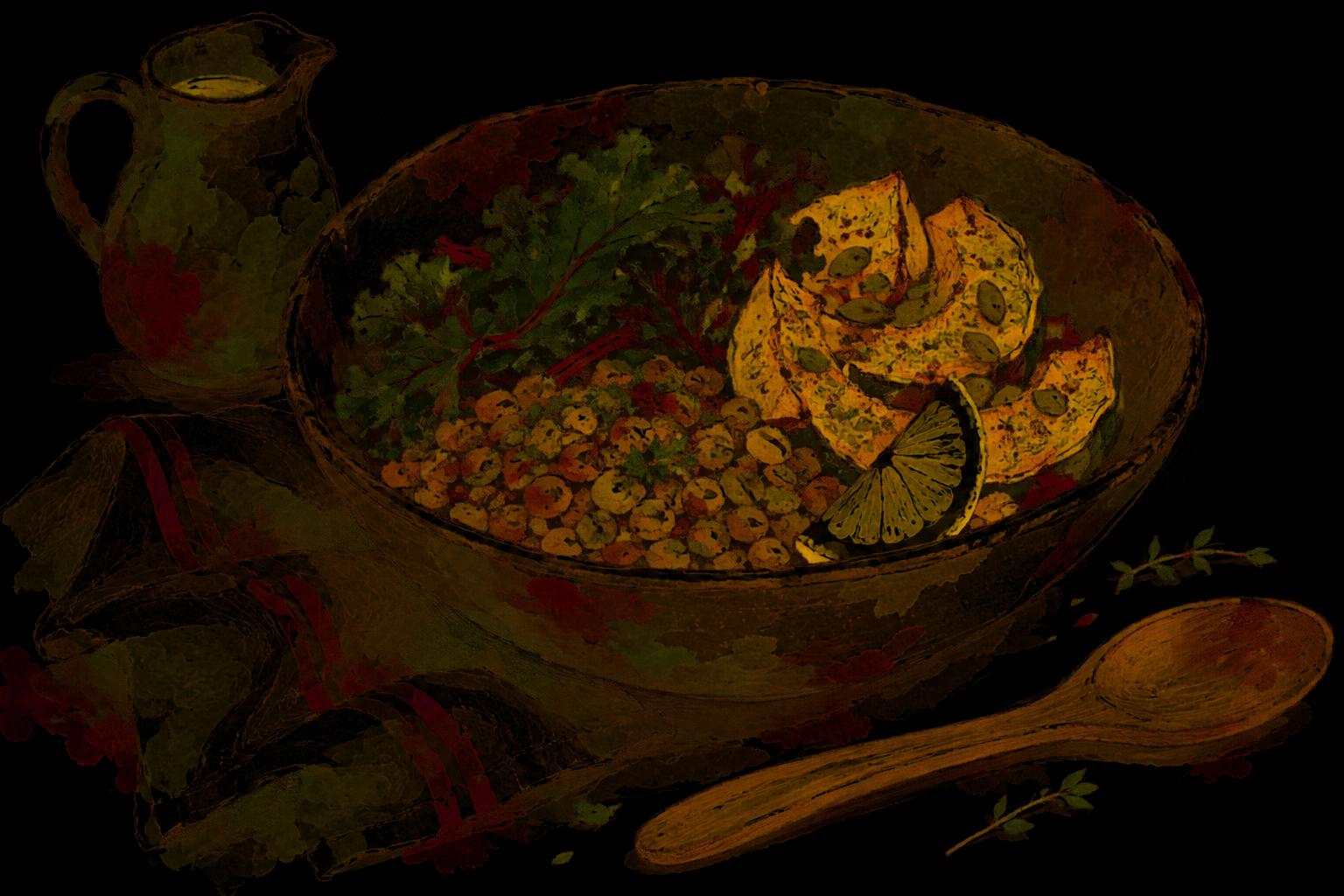
You do not need a recipe for a grain bowl, only a formula. Put a whole grain in the bottom, add a bean, lentil or tofu, two kinds of vegetables, a handful of greens and a good sauce, then finish with something crunchy. Once those five parts feel familiar, you can make a filling bowl from almost anything already in your fridge.
I am a wellness coach, and I have eaten whole-food, plant-based for about thirty years, with no meat or dairy. A grain bowl is a close cousin of the big salad, a daily habit I recommend to anyone eating this way. It asks very little on a busy day: no measuring, no cookbook open on the counter, just a few things cooked earlier, put together in a different way each time.
Why a formula beats a grain bowl recipe
Food is Right Feeding, the second petal of the Starflower, the method in my book, Lifetime Body by Design. Each petal is a "Right Action", one part of a healthy life practiced until it becomes ordinary. Right Feeding is less about a perfect menu than about eating whole food on an ordinary Tuesday, and I cover the wider petal in how to go plant-based.
Recipes are useful when you are learning, but they have a weakness: they ask you to shop for them. A formula works the other way round. It starts with what you have. Half a pot of rice, the end of a can of chickpeas, two carrots and some spinach is not a sad fridge, it is lunch.
You will see these called Buddha bowls, power bowls, nourish bowls and grain bowls. The names change with the café; the idea does not. A whole grain, a protein, plenty of vegetables and a sauce that pulls them together.
The five parts of a grain bowl
Here is the formula, with rough amounts for one bowl. These are starting points, so adjust them to your appetite.
| Part | How much for one bowl | Good choices |
|---|---|---|
| Whole grain | About 3/4 cup cooked (180 ml) | Brown rice, quinoa, farro, barley, buckwheat, millet |
| Bean, lentil or tofu | About 1/2 to 3/4 cup (120 to 180 ml) | Chickpeas, black beans, green lentils, edamame, baked tofu, tempeh |
| Two vegetables, one cooked and one raw | About 1 to 2 cups (240 to 480 ml) in all | Roasted squash or sweet potato, broccoli, mushrooms; grated carrot, cucumber, cabbage, radish |
| Greens | A large handful | Spinach, kale, arugula, shredded lettuce |
| Sauce | About 2 tablespoons (30 ml) | Tahini and lemon, peanut and lime, miso and ginger, a green herb sauce |
Then the finishing touch: a spoon of pumpkin or sesame seeds, a few chopped nuts, a squeeze of lemon, fresh herbs, or some sauerkraut for sharpness.
The one rule worth keeping is that the grain should not be the biggest thing in the bowl. Vegetables and beans should take up more room than the rice. It is easy to fill a bowl with grain because it is soft and already cooked, and then the bowl is mostly starch with a garnish.
Cooking the building blocks ahead
A grain bowl is fast only if the slow parts are already done. Cook a pot of grain, a pot of lentils or beans and a tray of roasted vegetables on one afternoon a week, and the bowls take five minutes from then on. I set out the whole session in vegan meal prep, including how to cool and store cooked grains safely, which matters most with rice.
For the grain itself, two pieces will get you started: how to cook quinoa, which is ready in about fifteen minutes, and how to cook brown rice, which takes longer but keeps its texture well in the fridge. Cooking times vary with the pot and the stove, so use them as a guide.
For the protein, a pot of lentils or beans from dried is cheap and keeps for days. My pieces on how to cook lentils and how to cook tofu cover two of the most useful. Canned beans, rinsed, are perfectly good on a week when there is no time.
Sauces that make the bowl
The sauce is what turns a pile of good things into a meal you want to eat. It is also where store-bought bowls often hide sugar and a good deal of oil. These four take a minute or two and keep in a jar in the fridge for several days.
- Tahini and lemon. Two tablespoons of tahini, the juice of half a lemon, a small crushed garlic clove, a pinch of salt and enough water to make it pour. It thickens at first, then loosens as you add water.
- Peanut and lime. Two tablespoons of peanut butter with nothing added, the juice of half a lime, a teaspoon of soy sauce, a little grated ginger and warm water to thin it.
- Miso and ginger. A tablespoon of miso, a little grated ginger, a squeeze of lemon or a splash of rice vinegar and water. Salty and deep, good with tofu and broccoli.
- Green herb sauce. A big handful of parsley or cilantro, a little garlic, lemon juice, a spoon of extra virgin olive oil and a splash of water, blended or chopped very fine.
A good sauce covers a lot. Leftover vegetables that looked tired on the plate taste new again under tahini and lemon.
Three grain bowl ideas
Here are three combinations to start from. Treat them as examples of the formula, not rules.
1. Quinoa, chickpea and cucumber
Quinoa, a scoop of chickpeas, diced cucumber and tomato, a little red onion, a handful of spinach and plenty of chopped parsley. Tahini and lemon sauce, and a sprinkle of pumpkin seeds. It packs well for a day out and tastes good cold.
2. Brown rice, black bean and sweet potato
Brown rice, black beans, cubes of roasted sweet potato, shredded red cabbage, corn if you have it and a few slices of avocado. Squeeze plenty of lime over it, add a spoon of salsa, and the herb sauce made with cilantro if you want more. It is a gentle start for anyone who thinks they do not like beans.
3. Barley, tofu and broccoli
Barley or farro, cubes of baked tofu, roasted broccoli, grated carrot and a handful of kale softened with a squeeze of lemon. Miso and ginger sauce, and sesame seeds on top. Barley is chewy and filling, and it makes the bowl feel like dinner.
Making grain bowls a habit
What keeps many people eating this way is not discipline but a full fridge. When the building blocks are there, a bowl is the easiest thing to make, easier than ordering food or opening a package. That is the whole trick of the stem of the Starflower, Right Habits: make the good choice the convenient one, and repeat it until you stop thinking about it. I wrote more about that in how to build good habits.
A few small habits help:
- Keep the parts in separate containers. Grain, beans, cooked vegetables, raw vegetables and sauce all keep better apart, and you can mix them differently each day.
- Change one thing each time. Same grain, different sauce. Same beans, different vegetables. Variety comes from the edges.
- Pack the sauce on the side if the bowl is going to work, so the greens stay crisp.
- Make a bowl night for friends. Put everything out on the table and let people build their own. It is an easy way to have people round without fuss, and an easy way to keep in touch, which I wrote about in how to make friends as an adult.
If you would like guided sessions for other parts of the day, they live at Lifetime Body by Design.
A full fridge of plain, cooked food is worth more than a shelf of recipes.
A few questions people ask me
What is the difference between a grain bowl and a Buddha bowl? Very little. Both are a bowl of grain, protein, vegetables and sauce. Some people use "Buddha bowl" for a bowl that leans more on vegetables, but the formula is the same.
Can I eat a grain bowl warm or cold? Either. In winter, warm the grain and beans and leave the raw vegetables and greens cold on top. In summer the whole thing can come straight from the fridge.
What if I do not like quinoa or brown rice? Try farro, barley or buckwheat, or skip the grain and use a baked potato or sweet potato as the base. Whole wheat pasta works too.
How long do grain bowls keep? Assembled with sauce, they are best the same day. Kept as separate parts in the fridge, they last a few days, though cooked rice needs extra care. My vegan meal prep piece has the details.
There is more from my kitchen under Whole food nutrition. If you are new to eating this way, begin with how to go plant-based, and for more ideas to fill a bowl, see my high-protein vegan meals.
This article is general information and one person's experience. It is not medical or dietary advice. Please speak to your doctor or a registered dietitian before making significant changes to how you eat.
Carol Pocock is a wellness coach, yoga teacher and the author of Lifetime Body by Design. Guided sessions are at Lifetime Body by Design. More about Carol.

