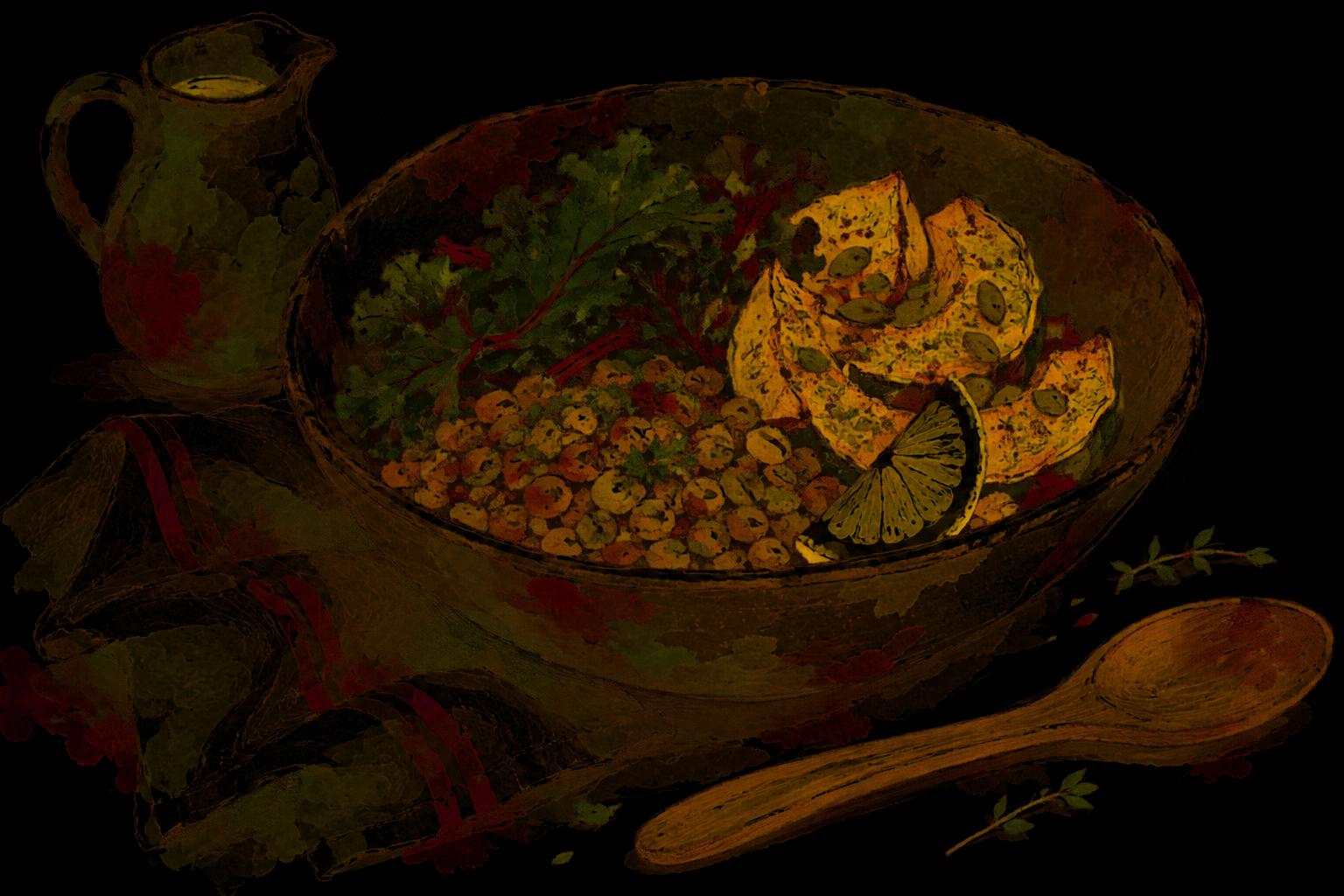
A good vegetable curry starts with spices toasted for a minute in a little olive oil, then onion, garlic, ginger and tomato cooked down into a thick base. Into that go chickpeas and whatever vegetables are in season, added in order of how long they take, with water or a little light coconut milk to make the sauce. It takes about forty-five minutes, it feeds four, and the same method works in January and in August.
I am a wellness coach, and I have eaten whole-food, plant-based for about thirty years, with no meat or dairy. Food is Right Feeding, the second petal of the Starflower, the method in my book, Lifetime Body by Design. Each petal is a Right Action, one of the fundamentals of health made into a daily habit. A curry is one of the most useful habits I know in the kitchen, because it takes the vegetables left at the end of the week and turns them into something people are glad to eat. If you have made my dal recipe, this is its opposite in one way: dal saves the spices for the end, and this curry builds them at the start.
What "curry" means here
The word curry covers a huge range of dishes from many cuisines around the world, each with its own spices and methods. Cooks who grew up with them have their own ways, and those are worth learning.
What I give here is one plain home method, adapted to the way I eat. It uses whole and ground spices you can find in most supermarkets, no ghee or cream, and no seed oils.
Vegetable curry vs dal
It is not dal with vegetables in it.
- The base. Dal is built on lentils or split pulses cooked to a purée. This curry is built on vegetables, with chickpeas for body.
- The spices. Dal is finished with spices warmed separately and poured in. Here the spices go in first and cook into the sauce.
- The texture. Dal is smooth. A vegetable curry has pieces you can see, some soft and some with a little bite.
My master vegetable curry recipe
This makes about four servings. It freezes well.
For the base
- 1 tablespoon extra virgin olive oil
- 1 teaspoon cumin seeds
- 1 teaspoon brown mustard seeds (optional)
- 1 large onion, finely chopped
- 4 cloves garlic, chopped (I explain the quickest way in how to mince garlic)
- A thumb of fresh ginger, grated
- 1 small green chili, sliced, or a pinch of chili flakes (optional)
- 2 teaspoons ground coriander
- 1 teaspoon ground turmeric
- 1 teaspoon ground cumin
- One 14 oz (400 g) can chopped tomatoes
For the pot
- About 5 cups (roughly 700 g) mixed vegetables, cut into bite-sized pieces (see the table below)
- One 15 oz (425 g) can chickpeas, drained and rinsed, or the same amount home-cooked
- 1 to 1½ cups (250 to 350 ml) water or low-salt vegetable stock
- ½ can light coconut milk, or none
- 2 large handfuls of spinach or chopped kale
To finish
- 1 teaspoon garam masala
- Juice of half a lime or lemon
- A handful of chopped cilantro
- Salt to taste
Method
- Toast the whole spices. Warm the olive oil in a wide, heavy pot over medium heat. Add the cumin and mustard seeds. When the mustard seeds start to pop and the cumin darkens slightly, after thirty seconds to a minute, move straight on. If they turn black and smell bitter, start again.
- Soften the onion. Add the onion with a pinch of salt and cook for about eight to ten minutes until soft and golden. If it starts to stick, add a spoonful of water rather than more oil.
- Add the aromatics. Stir in the garlic, ginger and chili for a minute, then the ground coriander, turmeric and cumin for about thirty seconds, until they smell toasted. Keep stirring so they do not catch.
- Cook down the tomatoes. Add the can of tomatoes and simmer for about five to eight minutes, until the mixture is thick and jammy and starts to pull away from the bottom of the pot. This is where most of the flavor comes from, so do not rush it.
- Add the vegetables in order. Firm vegetables go in first with the chickpeas and the water: they need about 20 to 25 minutes at a gentle simmer with the lid half on. Softer ones go in for the last 10 minutes. The table below shows which is which.
- Add coconut milk, if using. Stir it in for the last five minutes, just to warm through. Do not let it boil hard.
- Wilt the greens. Fold in the spinach or kale for the last two or three minutes.
- Finish and taste. Off the heat, stir in the garam masala, lime juice and cilantro, then season with salt. It often needs more salt or lime than you expect.
Times vary with your pot and how large you cut the vegetables, so test with a knife.
Cook the base until it is thick, and the curry looks after itself.
Seasonal vegetable swaps
Use about five cups of vegetables in total, mixing two or three from the same row or across rows. Firm vegetables go in early; quick ones go in late.
| Season | Firm (in early, 20 to 25 minutes) | Quick (in late, about 10 minutes) | Greens (last 2 to 3 minutes) |
|---|---|---|---|
| Spring | New potatoes, carrots | Asparagus, peas, spring onions | Baby spinach |
| Summer | Eggplant | Zucchini, green beans, bell peppers, okra | Chard |
| Fall | Butternut squash, sweet potato | Cauliflower, mushrooms | Kale |
| Winter | Potatoes, parsnips, turnips | Cabbage, frozen peas | Collard greens or kale |
Squash is the one most people struggle to cut. I go through it in how to cut a butternut squash. Frozen peas, spinach and green beans work well too: add them straight from the freezer near the end.
Light coconut milk or none
Coconut milk gives a richer, rounder sauce. Full-fat coconut milk is very heavy, so if I use it at all, I use half a can of the light kind. Without it, the curry is brighter and more tomato-led, and just as satisfying with rice. A few other ways to make it creamy without coconut:
- Blend a ladleful. Take a cup of the finished curry, including some chickpeas, blend it smooth and stir it back in.
- Cashews. Soak a small handful in hot water for twenty minutes, then blend with a little of the cooking liquid.
- Unsweetened plant yogurt. Stir in a spoonful off the heat, just before serving, so it does not split.
Chickpea curry and other ways to vary it
- Chickpea curry: use two cans of chickpeas and only three cups of vegetables, with spinach to finish. It is quicker and more filling.
- With lentils: add half a cup of rinsed red lentils with the water and an extra cup of liquid. They melt into the sauce and thicken it.
- With tofu: add cubes of firm tofu with the quick vegetables. I wrote about getting tofu right in how to cook tofu.
- With crunch: scatter roasted chickpeas on top of each bowl.
What to serve with vegetable curry
Brown rice is my usual, cooked as I describe in how to cook brown rice. Quinoa or a whole wheat flatbread work too.
The curry keeps for about three or four days in the fridge once cooled and covered, and it freezes well in portions without the greens. It thickens as it sits, so loosen leftovers with a splash of hot water. Making a pot once a week is a small habit that saves a lot of evenings, and it is how most habits last: easy to repeat. I wrote about that in how to build good habits. A pot this size is also made for sharing, which I wrote about in family dinner.
A few questions people ask me
Can I make vegetable curry without oil? Yes. Toast the whole spices in a dry pot, shaking it, then soften the onion with spoonfuls of water. The flavor is a little lighter but still good.
Can I use curry powder instead of separate spices? Yes. Use about one tablespoon in place of the ground coriander, turmeric and cumin. Check the label, as some blends contain added sugar or salt.
Why does my curry taste flat? Usually the tomato base was not cooked down far enough, or it needs salt and lime at the end. Those two steps make most of the difference.
Is vegetable curry filling enough for a meal? With the chickpeas and rice, many people find it is. If you are new to beans, start with a smaller bowl and build up, and if you have a digestive condition, ask your doctor first.
There is more from my kitchen under Whole food nutrition, and if you are just starting out, begin with how to go plant-based. For guided sessions across the whole method, see Lifetime Body by Design.
This article is general information and one person's experience. It is not medical or dietary advice. Please speak to your doctor or a registered dietitian before making significant changes to how you eat.
Carol Pocock is a wellness coach, yoga teacher and the author of Lifetime Body by Design. Guided sessions are at Lifetime Body by Design. More about Carol.

