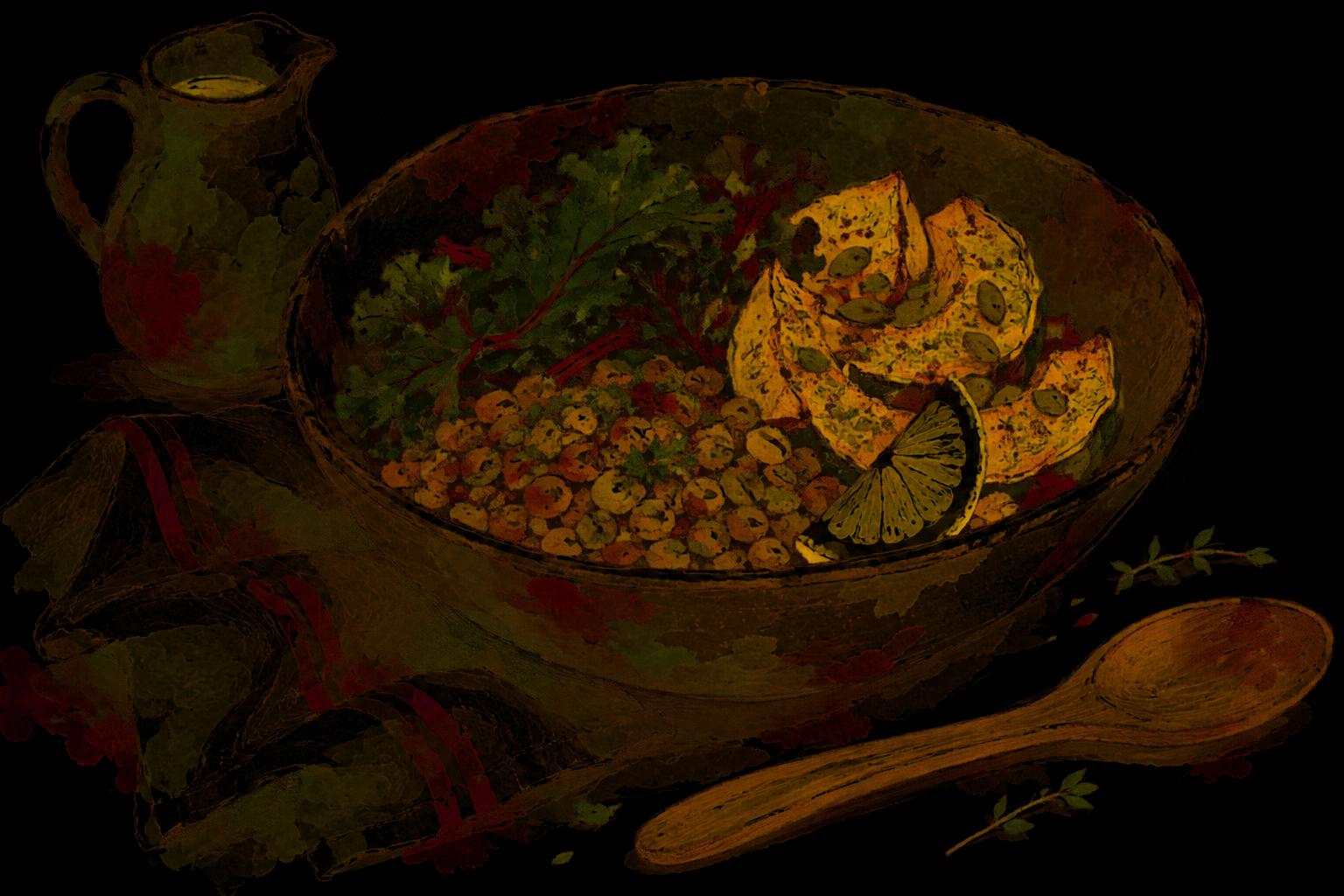
So what is farro? It is a whole grain from an old family of wheat, sold as plump, light brown kernels that cook up chewy, with a mild, nutty taste somewhere between brown rice and barley. Because it is wheat, farro contains gluten. You cook it much like pasta, in a pot of simmering water, and a batch keeps in the fridge for several days, ready for bowls, soups and salads.
I am a wellness coach, and I have eaten whole-food, plant-based for about thirty years, with no meat or dairy. Whole grains are one of the plain, steady foods that make that way of eating easy to keep up, and farro is one of the most forgiving of them. It is hard to overcook into mush, it reheats well, and it tastes of something even with nothing on it.
Where farro belongs in the way I eat
In my book, Lifetime Body by Design, food is Right Feeding, the second petal of the Starflower. Each petal is a "Right Action", one part of a healthy life practiced until it becomes ordinary, and Right Feeding is about whole foods, eaten close to the way they grow. A grain you buy as a kernel and cook yourself fits that well. I cover the wider petal in how to go plant-based.
What farro is, exactly
"Farro" is an Italian word, and it does not name one single plant. The Whole Grains Council describes three ancient wheats that go by the name in Italy: einkorn, called farro piccolo or "little farro"; emmer, called farro medio or simply farro; and spelt, called farro grande or "big farro". It describes emmer as one of the first cereals ever domesticated in the Fertile Crescent.
A bag labeled simply "farro" does not always say which of the three is inside. In the kitchen it matters less than you would think.
The bigger difference is how much of the outer layer has been rubbed off, which changes the cooking time:
- Whole farro still has its bran. It is the chewiest and takes the longest to cook.
- Semi-pearled farro has had some of the bran scratched away. It cooks faster and is the kind most often sold.
- Pearled farro has had most of the bran removed. It is the quickest, and the softest, but the Whole Grains Council advises avoiding labels that say "pearled" if you are looking for whole-grain farro.
If the bag does not say, assume pearled or semi-pearled and start tasting early.
Is farro gluten free?
No. Farro is wheat, and it contains gluten. The Celiac Disease Foundation lists farro, along with emmer, einkorn and spelt, among the varieties of wheat that contain gluten. If you have celiac disease, a wheat allergy or have been told to avoid gluten, farro is not for you, and your doctor or dietitian can help you choose other grains. Quinoa, buckwheat, millet and brown rice fill the same place in a meal, and I have written about how to cook quinoa and how to cook brown rice.
Farro vs barley
The two look and eat a lot alike, and both come pearled or whole. The differences are small:
| Farro | Barley | |
|---|---|---|
| What it is | An old form of wheat | A separate cereal grain |
| Gluten | Contains gluten | Also contains gluten |
| Texture | Firm, separate kernels with a good bite | Softer and a little creamier, thickens a soup more |
| Flavor | Nutty, slightly sweet | Milder, more neutral |
| Best for | Salads and bowls where you want each grain distinct | Soups and stews where you want body |
The Celiac Disease Foundation lists barley among the grains that contain gluten too, so swapping one for the other does not help anyone avoiding gluten. In most recipes you can trade them freely and change only the cooking time.
How to cook farro
There are two ways, and the first is the one I would teach.
The pasta method. Rinse 1 cup (about 200 g) of farro in a sieve. Bring a large pot of water to a boil, add a good pinch of salt and the farro, and simmer, uncovered, until the kernels are tender but still chewy in the middle. Drain it well, as you would pasta. You do not need to measure the water, and you cannot burn the pot.
The absorption method. Put 1 cup of rinsed farro in a pot with about 2½ to 3 cups (600 to 720 ml) of water or low-salt vegetable broth and a pinch of salt. Bring it to a boil, cover, turn it down low and simmer until the water is absorbed and the grain is tender. Drain off any water left in the pot.
Either way, 1 cup of dry farro gives you roughly 2 to 2½ cups cooked. These times are approximate and vary with the farro, the pot and the stove, so taste rather than trust the clock:
- Pearled: about 15 to 20 minutes.
- Semi-pearled: about 25 to 30 minutes.
- Whole: about 40 minutes to an hour. Soaking it in water overnight shortens the time. For more flavor, toast the dry kernels in the pot for two or three minutes until they smell nutty, then add the water. A bay leaf, a smashed garlic clove or a strip of lemon peel in the water does a lot for very little effort.
How to buy and store farro
Look for farro near the rice and barley, or in bulk bins at health food shops. Check the bag for the words whole, semi-pearled or pearled, so you know how long it will take.
Keep dry farro in a sealed jar in a cool, dark cupboard. Whole farro still has its bran, which contains a little natural oil, so it keeps best if you use it within a few months, or store it in the fridge or freezer.
Cooked farro keeps in a covered container in the fridge for about four or five days. It also freezes well. Spread it on a tray to cool, then pack it flat in bags in meal-sized portions, and you can tip it straight into a soup or a hot pan.
Three plain ways to use farro
These are farro recipes in the loosest sense: combinations to start from, not rules.
- In a grain bowl. Farro is one of my favorite bases for a bowl, because it holds its shape and does not go soggy under a sauce. Add a scoop of beans or lentils, a roasted vegetable, a raw one, a handful of greens and tahini and lemon. My piece on the grain bowl gives the whole formula.
- In a soup. Stir a cup or two of cooked farro into a pot of vegetable soup in the last few minutes, or simmer a handful of pearled farro in the soup itself. It makes a thin soup feel like a meal. It is a good addition to minestrone soup.
- In a chopped salad. Toss cooled farro with diced cucumber, tomato, red onion, a big handful of chopped parsley and mint, lemon juice and a small spoon of extra virgin olive oil. It works in the same spirit as a quinoa salad or tabbouleh, with more chew. Add chickpeas and it is lunch.
A pot of cooked grain in the fridge is half a meal already made.
Making it a habit
The trick with any whole grain is not finding the perfect recipe but having it cooked when you are hungry. Cook a pot of farro on the weekend, along with a pot of beans and a tray of roasted vegetables, and the week's lunches are mostly done. That is the stem of the Starflower, Right Habits, at work: make the good choice the easy one, then repeat it until you stop thinking about it. I wrote more about that in how to build good habits.
A full fridge also helps with the in-between eating many people struggle with. When a real meal is a few minutes away, the packet of crackers loses some of its pull, which I wrote about in how to stop snacking. For guided sessions across the whole method, see Lifetime Body by Design.
A few questions people ask me
What does farro taste like? Mild and nutty, a little sweet, with a firm, chewy bite. It tastes more of itself than white rice does, so it stands up well to strong flavors such as garlic, lemon and herbs.
Do I need to soak farro? Not for pearled or semi-pearled farro. Soaking whole farro overnight shortens the cooking time, but it is optional.
Is farro the same as spelt? Spelt is one of the three wheats that can be called farro in Italy, so sometimes it is. A bag of farro may hold emmer or einkorn instead, so check the label, and taste as it cooks.
There is more from my kitchen under Whole food nutrition. If you are new to eating this way, begin with how to go plant-based, and for a meal to build around a pot of farro, see the grain bowl.
This article is general information and one person's experience. It is not medical or dietary advice. Please speak to your doctor or a registered dietitian before making significant changes to how you eat.
Carol Pocock is a wellness coach, yoga teacher and the author of Lifetime Body by Design. Guided sessions are at Lifetime Body by Design. More about Carol.

