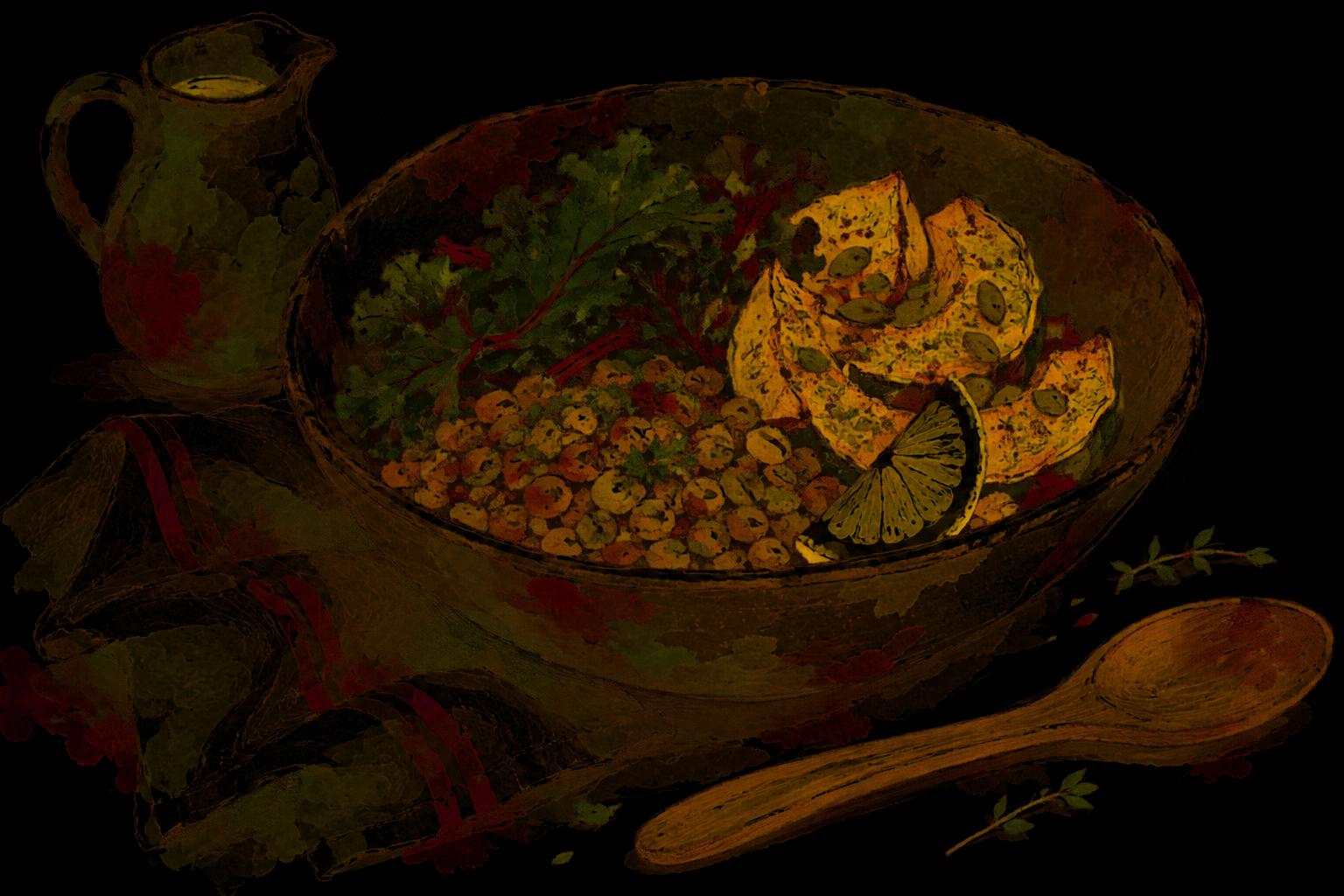
What are legumes? They are the plants of the bean family, and in the kitchen the word means their seeds and pods: beans, lentils, peas, chickpeas, soybeans and even peanuts. Pulses are the part of that family harvested as dry seeds, the beans, lentils, chickpeas and dried peas you buy in bags or cans. So every pulse is a legume, but not every legume is a pulse.
I am a wellness coach, and I have eaten whole-food, plant-based for about thirty years, with no meat or dairy. In my book, Lifetime Body by Design, food is Right Feeding, the second petal of the Starflower, the method the whole book is built on. When I describe a whole-food, plant-based plate, legumes are always in the list, beside vegetables, fruit, whole grains, nuts and seeds. They are the part of a plant-based kitchen people are most unsure about, usually because of the soaking and the long cooking. Once you know which is which, they are some of the simplest, cheapest foods there are.
Legumes: the plain definition
The USDA Forest Service describes legumes as members of the bean family, and its list of legume foods includes lentils, peas, broad beans, chickpeas, soybeans, lima and common beans, and peanuts. Most of them grow their seeds in a pod, and a pea pod is the clearest picture of it.
The same page explains one of their quiet talents: legumes live with soil bacteria in small nodules on their roots, and those bacteria turn nitrogen from the air into a form the plant can use, leaving some behind in the soil as a natural fertilizer.
For a cook, the useful version is shorter. If it grows in a pod and you eat the seeds, or sometimes the whole pod, it is a legume.
What are pulses?
The Food and Agriculture Organization of the United Nations (FAO) describes pulses as a sub-group of legumes harvested for their dry seeds. On another of its pages it calls them the dried edible seeds of legumes. In practice that means the pantry staples:
- dried beans of every kind: black, pinto, kidney, cannellini, navy, lima, adzuki, mung
- lentils: red, brown, green, French green, black
- chickpeas (also called garbanzo beans)
- dried peas: split green and yellow peas, black-eyed peas
- broad beans (fava beans), dried
The FAO marks World Pulses Day each year on 10 February.
Official definitions do not all agree at the edges, and a European Commission page that sets several of them side by side shows it. Peanuts are botanically legumes, but nutrition guidance usually groups them with nuts and seeds. Fresh peas and green beans are generally left out of pulses and counted as vegetables. Soybeans are legumes, and young green soybeans, edamame, are even counted in the USDA's pulse subgroup. None of this matters much at the stove: cook the dried ones like pulses and the fresh ones like vegetables.
Legumes vs beans
This is where the words get loose. "Beans" is the everyday name for one large group of legumes, the kidney-shaped seeds such as black, pinto and white beans. But the word wanders. Green beans are eaten pod and all, and counted as a vegetable. And chickpeas are beans in some kitchens and peas in others.
So a bean is nearly always a legume, and a legume is often, though not always, a bean. When a recipe or a shopping list says "beans and lentils", it nearly always means pulses.
A legumes list with how to cook each
These are the common legumes, with approximate times for the stove. Times vary a great deal with the age of the legume, the water and how gently you simmer, so judge by tasting, not the clock. Each cooking guide has the full method.
| Legume | Soak first? | Approximate simmer time | Good for | Full guide |
|---|---|---|---|---|
| Red or yellow split lentils | No | 15 to 20 minutes | Dal, soup, thickening a stew | How to cook lentils |
| Brown and green lentils | No | 20 to 30 minutes | Stews, warm salads, pasta sauce | How to cook lentils |
| Split peas | No | 45 minutes to 1 hour | Thick soups | Split pea soup |
| Black-eyed peas | Optional | 45 minutes to 1 hour | Stews, with greens | How to cook dried beans |
| Black beans | Yes, overnight | 1 to 1½ hours | Bowls, soups, burritos | How to cook black beans |
| Pinto beans | Yes, overnight | 1 to 1½ hours | Refried-style beans, chili | How to cook pinto beans |
| Chickpeas | Yes, overnight | 1½ to 2 hours | Hummus, curries, roasting | How to cook chickpeas |
| Red kidney and cannellini | Yes, overnight | Hard boil first, then 1 to 1½ hours | Chili, soups, salads | How to cook dried beans |
| Edamame | No (sold fresh or frozen) | A few minutes in boiling water | Snacks, bowls, stir-fries | What is edamame |
A cup of dried beans makes roughly two and a half to three cups cooked; a cup of dry lentils, roughly two to two and a half. South Dakota State University Extension describes edamame as edible, immature soybeans, cooked before eating, which is why they cook in minutes rather than hours.
The one safety rule
Please read this even if you skip the rest. Dried legumes must be cooked until soft all the way through, never eaten raw or half done. Red kidney beans need extra care. Health Canada advises soaking dry red kidney beans for at least five hours in two to three times their volume of water, discarding that water, and boiling them vigorously for at least ten minutes. It also says slow cookers do not get hot enough to make dry red kidney beans safe, and that canned kidney beans have already been heated enough during canning. The same page notes that preparing other dried legumes properly can reduce the risk of foodborne illness. The full method is in how to cook dried beans.
Lentils need twenty minutes. Beans need a little planning. Neither needs much skill.
Fitting legumes into an ordinary week
The hardest part of legumes is remembering to start them. These are the habits that make them easy:
- Keep cans for busy nights. Canned beans and chickpeas are cooked legumes, nothing more. Choose ones with only beans, water and a little salt, and rinse them.
- Cook dried beans once, eat them all week. A big pot on a quiet afternoon fills the fridge for a few days and the freezer for longer.
- Reach for lentils when you forgot to soak. Red lentils go from bag to dal in twenty minutes. My dal recipe is the one I would start with.
- Blend them. Chickpeas become hummus in five minutes, and white beans make a thick, creamy soup.
- Start small if they are new to you. Many people find their stomach settles into beans more comfortably when they add them gradually and cook them until really soft.
Soybeans also turn up as tofu and tempeh, which are made from them; I explain tempeh in what is tempeh. For where legumes sit among other whole foods, see what are whole foods.
A few questions people ask me
Are peanuts legumes? Yes, botanically. They are on the Forest Service's list of legume foods, though nutrition guidance usually groups them with nuts and seeds, which is how most of us eat them.
Are green beans legumes? They come from a legume plant, but they are eaten young, pod and all, and are counted as a vegetable rather than a pulse.
Do I have to soak legumes? Lentils and split peas, no. Most dried beans and chickpeas cook more evenly and quickly after a soak, and red kidney beans should always be soaked and boiled hard.
Are canned legumes as good as dried? For an ordinary week, yes. Dried cost less and taste a little better; canned save time. Both are whole foods.
There is more from my kitchen under Whole food nutrition, and if you are just starting out, begin with how to go plant-based. Putting a bag of beans to soak before bed is exactly the kind of small anchor I write about in how to build good habits, and a big pot of beans is a good thing to bring to a shared table, as in potluck ideas. For guided sessions across the whole method, see Lifetime Body by Design.
This article is general information and one person's experience. It is not medical or dietary advice. Please speak to your doctor or a registered dietitian before making significant changes to how you eat.
Carol Pocock is a wellness coach, yoga teacher and the author of Lifetime Body by Design. Guided sessions are at Lifetime Body by Design. More about Carol.

